
Steve is a new film that had its world premiere at this year’s Toronto International Film Festival, followed by a limited theatrical release on September 19, before landing on Netflix on October 3. Directed by Tim Mielants, the film stars Cillian Murphy, Tracey Ullman, Jay Lycurgo, Simbi Ajikawo, and Emily Watson. Set over the course of a single, intense day, it follows the devoted head teacher of a last-chance reform school as he struggles to keep his students in line while confronting personal pressures of his own.
I’ve been a fan of Cillian Murphy long before his Oscar-winning turn in Oppenheimer. Whether in a lead role or a smaller part, his performances always leave a lasting impression. Now, with an Oscar under his belt, he has every opportunity to step back or be ultra-selective — like Leonardo DiCaprio or Matthew McConaughey. But instead, he continues to champion smaller indie projects, reaffirming the value and necessity of these kinds of films.

It didn’t hit me until after the credits rolled just how much Steve reminded me of last year’s Small Things Like These. I hadn’t realized they shared the same director, but once I found out, it made perfect sense. Steve reunites Cillian Murphy, Emily Watson, and director Tim Mielants following their work on that earlier film. It’s easy to see why Murphy would want to keep collaborating with Mielants — beyond their strong working relationship, there’s a clear thematic thread running through their projects. Both seem drawn to quiet, character-driven stories that explore emotional and moral complexity beneath the surface.
The screenplay is penned by Max Porter, the author of the original novella. Initially, the film was titled Shy, after the book — a name that arguably carries more emotional and thematic weight. Instead, it was renamed Steve, aligning with the story’s perspective through that character. While the title makes sense in context, I’d still argue it’s one of the weaker film titles of the year — not helped by the ongoing “Steve” joke in A Minecraft Movie. But don’t let that throw you off. Murphy once again proves why he’s an Oscar winner, fully inhabiting the role and delivering a performance that’s quietly powerful and deeply empathetic.

As a former teacher — and someone married to one — I have a deep understanding of the challenges facing our school systems. Depending on your perspective, it can be easy to dismiss troubled students as beyond help. But through Cillian Murphy’s performance, the film reminds us of the profound influence educators can have, and how that responsibility can take a toll on their own mental health. Murphy fully embodies a man who devotes everything to others while quietly battling his own demons, including hidden alcoholism. His performance is restrained, internalized — a kind of quiet intensity that speaks volumes without needing to say much. It’s a different side of Murphy, one that director Tim Mielants draws out with subtlety and care.
While Shy might have been a more evocative title — and likely ties more directly to the novella — the change to Steve feels intentional. I haven’t read the original book, but I imagine it centers more on the student’s perspective. In contrast, the film elevates the viewpoint of Steve, likely to align with Murphy’s lead role and emphasize the emotional weight carried by teachers. That said, the film doesn’t neglect its students — it shines in portraying their experiences with authenticity, particularly through Jay Lycurgo’s standout performance. Together, Murphy and Lycurgo highlight the critical need to address mental health — not just for students, but for educators too.

The film reminded me a lot of The Basketball Diaries in its focus on character-driven performance. However, it struggles with pacing early on. I found it difficult at first to grasp the significance of this particular day, which made the opening feel slower than it needed to be. The documentary-style approach helps us understand the characters more intimately, but it takes time to feel fully invested in them.
While the conclusion suggests what happened, it leans too far into ambiguity. I don’t mind an open-ended finale — especially one that invites you to reconsider what came before — but in this case, the lead-up is fairly straightforward, making the vagueness feel more frustrating than thought-provoking.
Outside of the strong performances, the film will likely be remembered for one standout camera sequence that feels completely out of place. Visually, it’s impressive and clearly serves a purpose, but tonally, it clashes with the rest of the film. If similar stylistic choices had been woven throughout — particularly earlier on — it might have felt more cohesive. As it stands, it feels like a jarring detour rather than a natural extension of the film’s visual language. Introducing more of these dynamic sequences earlier could have also helped engage viewers more effectively, especially during the slower first act.
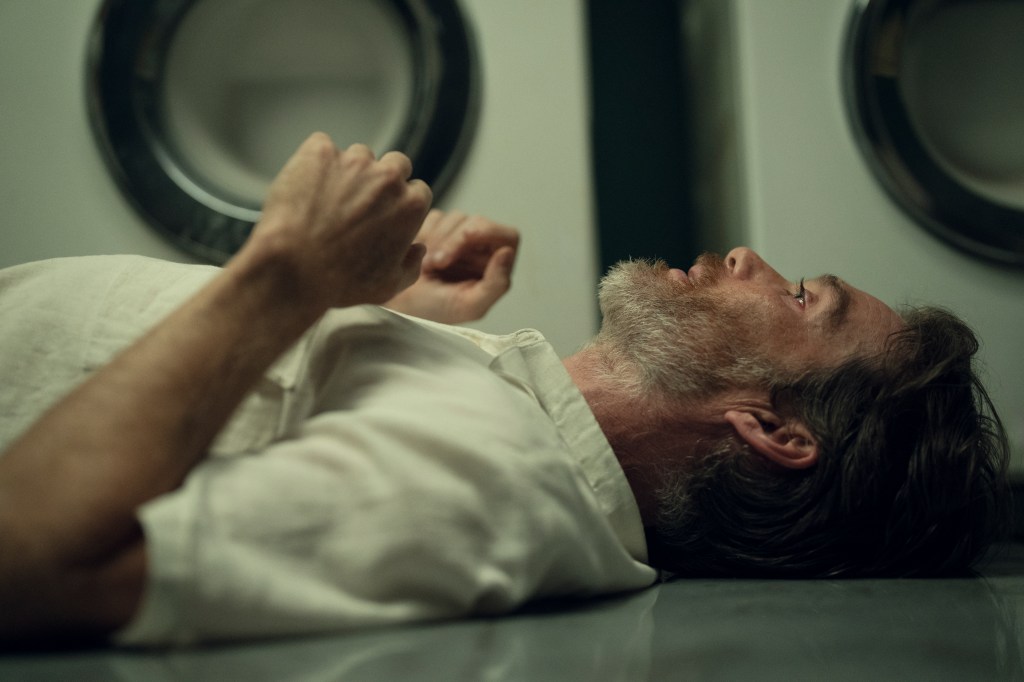
Overall, Steve serves as a powerful acting showcase for both Cillian Murphy and Jay Lycurgo, who breathe life into a story that underscores the importance of empathy, education, and mental health. The film offers a compelling look into the struggles within the school system and how we can better support one another through it. While it falters slightly with an out-of-place camera sequence, a slow start, and an overly ambiguous ending, Steve ultimately leaves a lasting impression — one that lingers well after the credits roll.
VERDICT: 3.5/5 – Pretty Good
 The Creative Cinematic Collection
You must be logged in to post a comment.