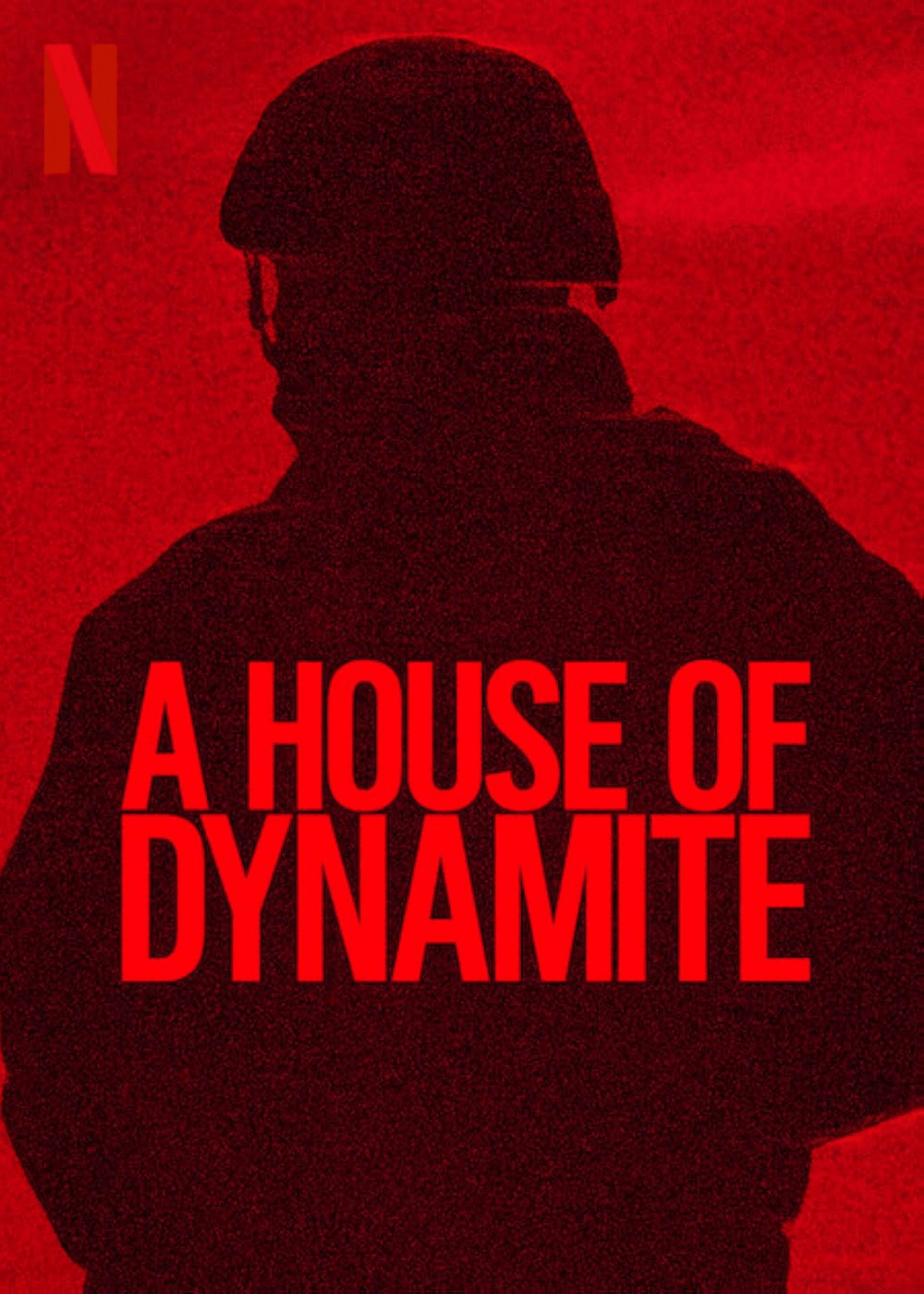
A House of Dynamite is a new film now streaming on Netflix. Written by Noah Oppenheim and directed by Kathryn Bigelow, the film stars Idris Elba, Rebecca Ferguson, Gabriel Basso, Jared Harris, Tracy Letts, Anthony Ramos, Moses Ingram, Jonah Hauer-King, Greta Lee, and Jason Clarke. When a single, unattributed missile is launched at the United States, a desperate race begins to uncover who is responsible—and how to respond before it’s too late.
A House of Dynamite was one of my most anticipated releases of the year, largely because of director Kathryn Bigelow. It’s been eight years since Detroit, one of my favorite films of that year, and I was eager to see her return to the director’s chair.
This is a film that’s bound to divide audiences, but it’s also one that demands conversation. Bigelow once again proves she’s unafraid to tackle complex, politically charged material—and whether you love it or not, A House of Dynamite will linger with you long after the credits roll.

Kathryn Bigelow first came into the spotlight with her Oscar-winning film The Hurt Locker—an exceptional work that established her as a director capable of immersing audiences in scenarios that feel as classified as they are gripping. The same can be said of A House of Dynamite. If I had my way, she’d already be in the conversation for a Best Director nomination at the Oscars. From her visual style to the performances she draws from her cast, Bigelow once again reaffirms her place among the finest filmmakers working today. Eight years since her last film, she hasn’t missed a beat.
The film also boasts an impressive ensemble cast. Its structure, however, is one of the reasons it may divide audiences. Without giving anything away, I found myself wondering how the experience might have changed if the story had been told entirely in the present tense, rather than revisiting the events. While that alternative could have offered a more streamlined narrative, Bigelow’s chosen approach gives each performance room to breathe. It allows the film to dig deeper into how the unfolding crisis personally affects every character, making the emotional undercurrents resonate even more strongly.

It’s hard to single out one performance as the clear standout—each actor contributes something vital without overshadowing the others. Idris Elba delivers a quietly surprising turn, his character lingering in your thoughts long after the credits roll. While Rebecca Ferguson isn’t on screen as much as I would have liked, her presence is impactful and memorable, and it makes me eager to see her collaborate with Bigelow again in the future. Tracy Letts, Gabriel Basso, and Jared Harris also shine, with Harris delivering what may be the film’s most devastating and emotionally charged moment.
Having seen the film twice now, I still can’t get it out of my head. I’ve always appreciated ambiguous endings, and while this one might have been handled in a slightly more satisfying way, its impact remains undeniable. Thematically, the film underscores that there are no real win-win scenarios in this world—it forces those in power to confront just how little control they truly have. Every possible decision carries catastrophic consequences: one path leads to devastation, another to the brink of global war. A House of Dynamite is the kind of film that leaves you wanting to unpack every detail, and for me, that’s a rare and exciting feeling.

The film has so many elements working in its favor, all combining to keep the tension high and the experience deeply engaging. Beyond Bigelow’s direction and the powerhouse performances, the score stands out as one of the year’s best. It pulls you in completely, echoing the characters’ emotions in a way that feels almost surreal.
As I mentioned earlier, the film’s editing and structure will likely be one of its most divisive aspects. There are several shocking moments revealed through shifts back in time, offering new perspectives on earlier events. This approach reminded me at times of Vantage Point, which also builds toward a central truth—but that’s not the goal here. Instead, Bigelow uses this fragmented storytelling to deepen our understanding of each character. I’m sure a linear version of this story could exist somewhere, but it wouldn’t come close to delivering the same emotional weight or nuance that this structure achieves.

Overall, A House of Dynamite delivers on nearly every front—direction, performances, story, themes, and score. Its unconventional structure is a bold creative choice that may not resonate with everyone, yet it’s hard to imagine the film being as effective without it. While I usually appreciate ambiguous endings, I do think the final moments could have been handled a bit differently. Still, the film leaves a lasting impression and is sure to spark conversation long after the credits roll.
VERDICT: 4/5 – Great
 The Creative Cinematic Collection
You must be logged in to post a comment.