
Nuremberg is a new film set to release in theaters on November 7. It made its debut at this year’s Toronto International Film Festival, where it received a four-minute standing ovation—one of the festival’s longest in history. Written and directed by James Vanderbilt, the film stars Russell Crowe, Rami Malek, Leo Woodall, John Slattery, Mark O’Brien, Colin Hanks, Wrenn Schmidt, Lydia Peckham, Richard E. Grant, and Michael Shannon. Set in postwar Germany, it follows an American psychiatrist tasked with determining whether Nazi prisoners are fit to stand trial for war crimes. In the process, he finds himself embroiled in a high-stakes battle of intellect and ethics with Hermann Göring, Hitler’s right-hand man.
Leading up to Nuremberg, nothing about it immediately grabbed me. Ensemble casts in historical dramas are hardly new. Looking at the filmmaker’s previous works, I especially didn’t think of much. I initially assumed it might be a remake or spiritual successor to Judgment at Nuremberg—a film I recently watched and loved. Combine that with the movie’s lengthy runtime, and I went in with low expectations. I couldn’t have been more wrong.

Going in expecting Nuremberg to be some kind of remake of Judgment at Nuremberg was the wrong mindset from the start. This film is its own entity, taking a far more psychological approach to the historical events while maintaining a riveting pace—something rarely seen in modern dramas. Movies like this simply aren’t made anymore. While there was a time when films of this caliber were more common, that sort of cinematic magic—those moments that remind you why you love film—is impossible to replicate.
Looking at James Vanderbilt’s previous work, it’s clear he’s primarily a writer rather than a director. His only prior directorial effort was 2015’s Truth. Outside of that, he’s mostly been involved in commercial hits, none of which hint at the level of craftsmanship he brings to Nuremberg. Here, Vanderbilt demonstrates a distinct vision, knowing exactly what this story needs. With a script driven largely by dialogue, he navigates long conversations with remarkable ease, placing the camera with precision—whether it’s capturing a character pouring a drink or shedding a tear.

Vanderbilt assembles one of the year’s strongest casts, many of whom haven’t had a film that truly showcases their talents in a while—until now. With the film so meticulously mapped out, he draws out each actor’s full range. It’s easy to be reminded why Russell Crowe and Rami Malek are Academy Award winners. I didn’t think Crowe could convincingly deliver dialogue in German, nor did I expect Malek to convey such raw emotion, yet both performances are nothing short of extraordinary.
Despite the film’s considerable length, I wasn’t sure I could get through it so late in the evening—but once it started, I couldn’t look away, finishing it the same night. Courtroom dramas rarely feel this riveting, and Nuremberg easily stands as the best of its kind since Oppenheimer. Clocking in at around two and a half hours, the film flies by, propelled by a clear three-act structure and relentless momentum. Dialogue is almost constant, yet in the rare moments of silence, your attention never wavers. There are also sequences that play out as though you are watching a play in one singular location with countless amounts of dialogue. One particularly chilling sequence without a single word stands out as one of the most powerful scenes in the entire film.
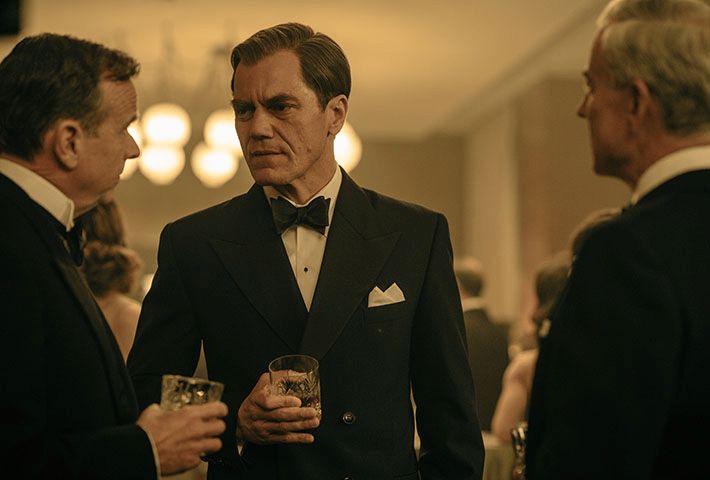
Although it’s a drama releasing in November, Nuremberg feels every bit like a blockbuster, thanks to its sweeping score that’s as emotional as it is grand. The production design draws you fully into the realism of each scene, making the emotional beats hit even harder. Despite the darkness of the story, there’s a surprising amount of humor that deepens your connection to certain characters. Vanderbilt clearly wants the audience to better understand these long-gone historical figures.
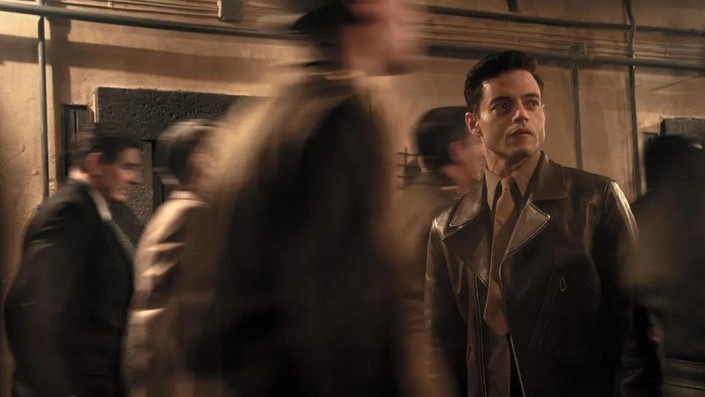
It’s difficult to find fault with this film. It exceeded all my expectations, leaving little to critique. Everything I thought might fall flat turned out to be fantastic. That said, some viewers might find the dialogue overly theatrical. If I had to pinpoint one minor flaw, Rami Malek’s introduction feels slightly too staged, lacking the natural, organic quality of his otherwise remarkable performance.
Overall, Nuremberg stands out as one of the year’s best films. Every element—from the dialogue and visuals to the direction and casting—works at 100%. This is the kind of grand, immersive drama that rarely gets made anymore. While firmly rooted in history, it also serves as a powerful reminder of the past, urging us not to repeat the atrocities that once occurred.
VERDICT: 4.5/5 – Amazing
 The Creative Cinematic Collection
You must be logged in to post a comment.