
The Testament of Ann Lee is a new film that premiered at this year’s Venice International Film Festival, where it was nominated for the Golden Lion, ahead of its limited theatrical release on December 25. Written by Mona Fastvold and Brady Corbet and directed by Fastvold, the film stars Amanda Seyfried, Thomasin McKenzie, Lewis Pullman, Tim Blake Nelson, Christopher Abbott, Stacy Martin, Matthew Beard, Scott Handy, Viola Prettejohn, Jamie Bogyo, and David Cale. It tells the extraordinary true story of Ann Lee, founder of the devotional sect known as the Shakers.
By now, most cinephiles are well acquainted with Fastvold and Corbet. After last year’s The Brutalist, the real-life romantic and creative partners left a considerable impression with their collaboration on that film. Now, only a year later, the duo returns—this time with Fastvold taking the director’s chair. While The Testament of Ann Lee shares certain thematic parallels with The Brutalist, particularly in its portrayal of characters encountering America for the first time, Fastvold distinguishes the film with her own assured directorial voice, delivering work that feels both confident and full of promise.
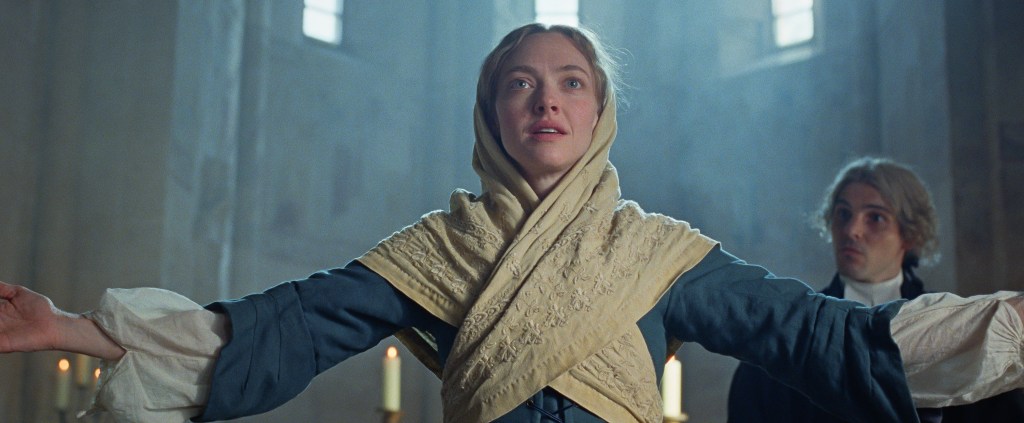
I wasn’t very familiar with the Shaker movement led by Ann Lee, and in some ways, I experienced the film as a Shaker counterpart to something like the 2018 film Climax. At the same time, it’s clear that Fastvold was intrigued by the idea of “What if God were a woman?”—an idea she communicates subtly rather than stating outright. There’s a single moment when the film directly notes that God could be male or female, but otherwise Fastvold lets the theme resonate through imagery and character rather than exposition. Given the arc of Ann Lee’s life, it’s easy to understand why she might seek to create a movement capable of reshaping the world beyond her homeland.
The film’s opening and final passages do feel somewhat rushed, yet they remain compelling in their own way. Rather than following the familiar rhythms of a traditional biopic, the film leans into the musical genre to propel its narrative. The choreography—how the characters move within the space—creates the impression of a living painting, guiding emotion and meaning through motion. While the film offers glimpses into Ann Lee and her brother’s backgrounds, it offers little explicit explanation of what drew them to the movement in the first place. Instead, Fastvold lets the musicality carry that weight, inviting the audience to feel their spiritual pull rather than be told about it directly.
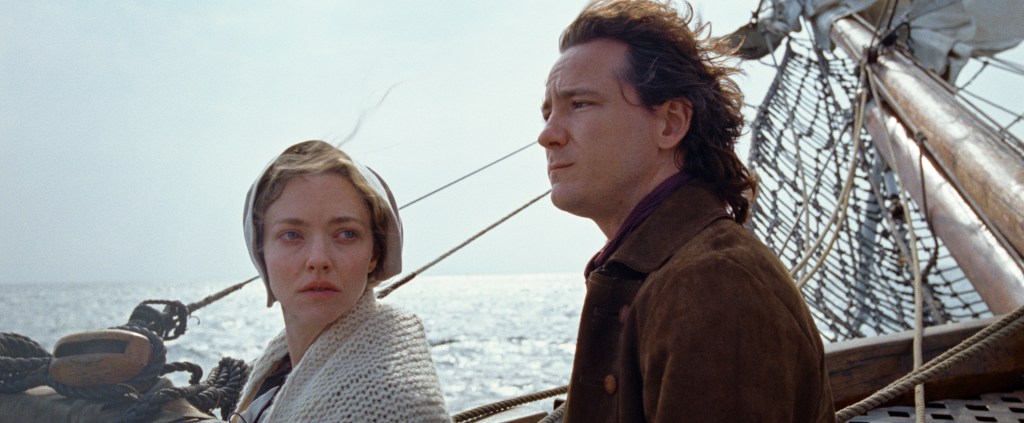
This may be the most self-aware musical I’ve seen. In fact, calling it a “musical” almost feels like a stretch. The people surrounding the Shakers recognize that the characters are singing, yet there’s no sense of traditional musical accompaniment magically materializing. Viewed realistically, the characters are simply dancing and singing; the instrumentation we hear is essentially what they perceive—the inner rhythm that enables their movement and expression.
As a director, Mona Fastvold distinguishes herself from her partner, Corbet. She draws out one of Amanda Seyfried’s strongest performances—arguably the best of her career. Fastvold’s command of movement is remarkable. The way she guides the cast through each scene creates a sense of constant motion, shaping the film’s emotional landscape through carefully imagined choreography. The confidence she instills in her performers radiates through every gesture, infusing the film with passion and emotional clarity that carries the story from beginning to end.
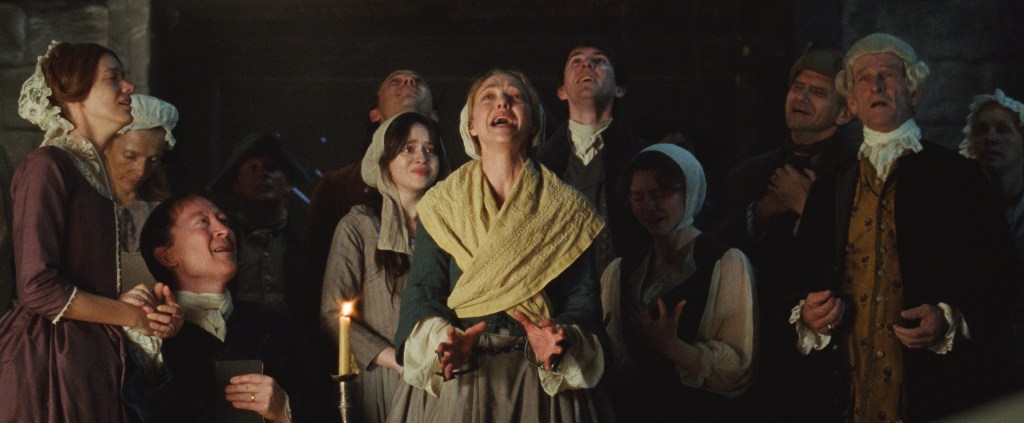
While the choreography is impressive on its own, the cinematography enhances it by capturing movement in a way that feels almost illusory. There’s a striking shot near the end in which the camera observes a group of dancers from above. It’s difficult to tell whether the characters are moving or the camera is—perhaps both—but the seamless interplay between choreography and cinematography creates a dreamlike sequence. Complementing this is one of the most beautiful scores of the year, a musical landscape that’s impossible to ignore.
As mentioned earlier, the beginning and ending do feel a bit rushed. The opening offers a strong emotional hook for why Seyfried’s character begins expanding this movement, yet I still found the motivations behind her and her brother joining somewhat unclear. Rather than laying out their reasons explicitly, the film communicates through tone and atmosphere—how they feel within this community becomes the explanation. The conclusion, meanwhile, transitions abruptly from the dramatic climax into the final moments. Although the film is fairly long, its pacing keeps the runtime from ever feeling burdensome. Still, a bit more connective tissue between the climax and the ending could have offered a more complete resolution for the characters. Even so, the film’s visual and auditory experience leaves a lasting impression.

Overall, The Testament of Ann Lee is not to be missed. Amanda Seyfried delivers arguably the best performance of her career, while the cinematography and choreography work seamlessly together to create a grand & immersive experience. The film’s haunting score lingers long after the credits roll. Though the beginning and ending could have benefitted from additional development, the film’s visual language alone provides plenty to ponder. In fact, the more I reflected on it, my rating grew—from a 3.5/5 to a solid 4/5.
VERDICT: 4/5 – Great
 The Creative Cinematic Collection
You must be logged in to post a comment.