
Sentimental Value is a new Norwegian film now playing in theaters. Before its nationwide release, it premiered at this year’s Cannes Film Festival, where it won the Grand Prix. It has also been selected as Norway’s submission for Best International Feature Film at the upcoming Academy Awards. Written by Eskil Vogt and Joachim Trier and directed by Trier, the film stars Renate Reinsve, Stellan Skarsgård, Inga Ibsdotter Lilleaas, and Elle Fanning. The story follows sisters Nora and Agnes as they reunite with their estranged father, the charismatic Gustav — a once-renowned director who offers stage actress Nora a role in what he hopes will be his comeback film. When Nora declines, she soon discovers he has given the part to an eager young Hollywood star.
From what I recall, I’ve definitely seen Joachim Trier’s 2021 film The Worst Person in the World, one of that year’s standout releases. I may have seen Oslo, 31 August, though I can’t say for certain. Regardless, anyone who enjoyed The Worst Person in the World will likely be drawn to Trier’s distinct directorial voice and Renate Reinsve’s compelling screen presence; the two proved through just that single film how exceptional they are together. Going in, I knew the basic premise, but the poster repeatedly made me question what kind of film to expect. The final product reveals a story with many moving parts that ultimately come together in a surprisingly effective way.

Given the sheer number of ideas at play in this film, I’m convinced Joachim Trier was the only filmmaker capable of bringing it to life. It feels as though he set out to make a movie entirely built on the principle of “show, don’t tell.” In anyone else’s hands, I doubt the result would have been nearly as effective. Trier reminds me why cinephiles like myself are so drawn to cinema in the first place — it’s a form of expression that often articulates emotions and experiences we struggle to put into words. Films like Perfect Days or The Life of Chuck can express what I feel far better than I ever could.
The family dynamic in Sentimental Value is deeply layered and strikingly authentic. All four performers balance one another beautifully — no one overshadows anyone else, and each actor delivers something truly memorable. There’s a reason all of them are already receiving significant Oscar attention. The film’s distinct characterization gives every performer room to shine in ways best experienced firsthand. Stellan Skarsgård is especially strong in a role many expect will put him in direct competition with Sean Penn for One Battle After Another. While Skarsgård is excellent, I still think the award may ultimately go to Penn.
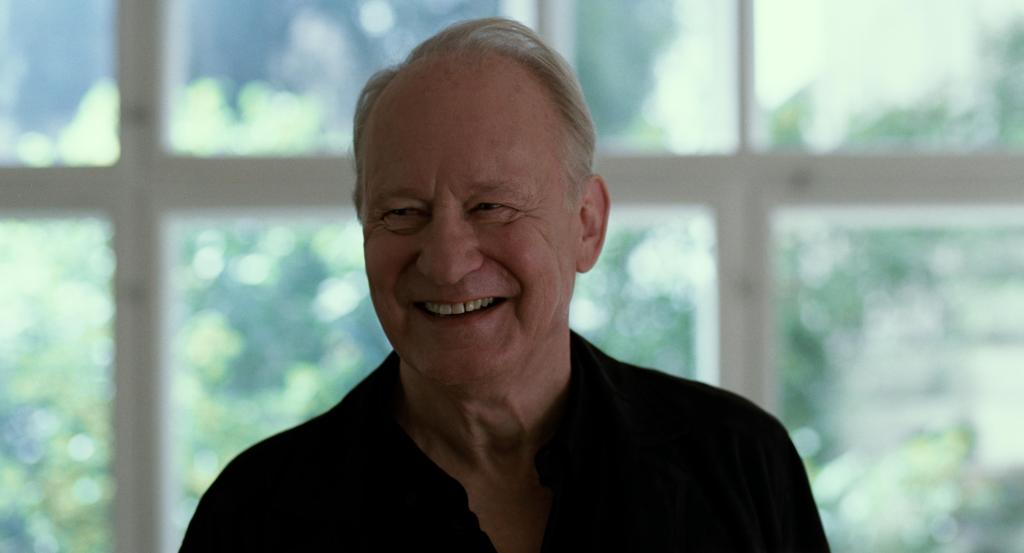
It’s refreshing to see that three of the four principal actors are women. While some might assume this makes the film resonate more strongly with female audiences, it’s presented in a way that feels truly universal. There were several moments where I genuinely forgot I was watching a movie — the dialogue carries such striking authenticity. From the way the sisters speak to one another to the way Elle Fanning fully immerses herself in their family dynamic, I couldn’t look away. Since I watched via a physical screener, I found myself pausing whenever something interrupted me because I didn’t want to miss a single detail.
Despite juggling so many ideas, the drama stays consistently gripping. You never quite know where the story is headed, and that unpredictability only deepens the emotional arcs of the characters. The film even lands moments of humor, largely because the situations feel so real. And while I’ve never personally experienced stage fright, the film captures one particular moment so vividly that it allows Renate Reinsve’s character to shine even more.

The film features consistently striking cinematography that’s easy to admire. Combined with the script’s naturalistic tone, the visuals make it feel as though you’re right there with the characters — walking along the beach with Stellan Skarsgård and Elle Fanning, stepping into the family’s house for the first time, or sitting in the room as the sisters share a heartfelt conversation. I also love how the film uses sound design to help us imagine more than what’s shown on screen; it adds an expressive layer that deepens the experience.
The one element that didn’t work for me was the repeated cuts to black. While effective at first, they eventually become tedious, interrupting the film’s momentum and making it harder to understand where we are in the next scene. They also complicate the sense of time, leaving it unclear how much has passed. The film could have been even stronger if it relied less on these abrupt transitions — even simple fades into the next scene might have better reflected the characters’ emotional states. Life moves forward, even when we pause to express how we feel, and a smoother transition could have captured that more naturally.

Overall, Sentimental Value is one of the most beautiful films of the year. Any award recognition it receives is well-deserved. The performances are outstanding, the story is unforgettable, and the film’s themes perfectly demonstrate the power of “show, not tell.” Aside from a single editing choice, this is a near-perfect masterpiece that demands to be seen.
VERDICT: 4.5/5 (Amazing)
 The Creative Cinematic Collection
You must be logged in to post a comment.