
Marty Supreme is a new film that premiered at this year’s New York Film Festival ahead of its wide release on December 25. Written by Ronald Bronstein and Josh Safdie and directed by Safdie, the film stars Timothée Chalamet, Gwyneth Paltrow, Odessa A’zion, Kevin O’Leary, Tyler Okonma, Abel Ferrara, and Fran Drescher. Set in 1950s New York City, this ping-pong drama follows rising table-tennis prodigy Marty Mauser as he goes to hell and back in pursuit of greatness.
When the film was first announced, I can’t say I shared the early hype. Despite enjoying the Safdies’ previous work, a movie about table tennis didn’t sound especially compelling to me. Still, I knew I’d end up seeing it. And after finally watching it, I realize I should’ve raised my expectations considerably. Even though the film premiered over a month ago to critical acclaim, I wasn’t about to miss one of the year’s most anticipated releases—especially with the chance to catch it well before its nationwide debut.

Look, I still work a full-time job—writing film reviews isn’t it. So when I saw that the press screening for this ran on a weeknight at 7:30 p.m. and clocked in at two and a half hours, I definitely had my reservations. And while the runtime is part of why the film has a few issues, it’s still an incredibly riveting experience. I think I was basing my expectations on Benny Safdie’s The Smashing Machine, anticipating a slower, more deliberate pace. Instead, Marty Supreme delivers a level of intensity closer to Uncut Gems. It’s clear that Josh is the one who brings that electric, high-wire energy.
When I watched Apple TV’s Mr. Scorsese earlier this year, I didn’t quite understand why Josh Safdie was interviewed. Now I do. This is the closest thing to a Scorsese film that Scorsese himself didn’t make. While Uncut Gems already showed that the anxiety-inducing momentum comes largely from Josh, here he proves he also knows how to channel that energy into rich characterization. Marty Mauser, played by Chalamet, pursues a bold dream that sends him on a journey straight out of the Scorsese playbook. The film makes clear just how far Marty is willing to go to make that dream real, and in doing so, it allows viewers to understand his motivations—and maybe even see parts of themselves reflected in him.
While Chalamet has come close to winning Best Actor at the Oscars before, I can confidently say this feels like his year. It’s hard to imagine anyone else inhabiting this role. He channels a kind of brash confidence that can be off-putting on the surface, yet he plays it in a way that helps the audience understand where it comes from. It’s not that Marty wants to behave this way—it’s that he believes it’s the only path to success. I couldn’t help but recall Chalamet once saying in an acceptance speech that he’s “in pursuit of greatness.” You can feel that same drive infused into his performance here.
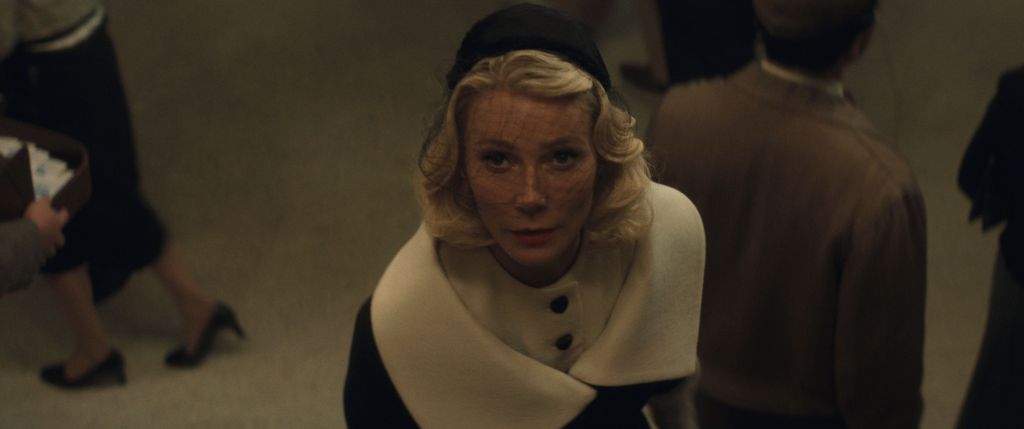
Though Chalamet is the standout, the supporting cast meets the film’s energy at every turn. None of them overshadow the others; instead, they balance one another perfectly. Early on, I thought the supporting lineup seemed almost random, but after seeing the film, it’s clear Josh Safdie knew exactly what he was doing. Gwyneth Paltrow is strong with the material she’s given, and Tyler Okonma fully leans into the film’s tone. Kevin O’Leary is surprisingly effective, especially considering how little acting he’s done. And while I’m not convinced Odessa A’zion will land a Best Supporting Actress nomination—as some have predicted—this is the performance that finally helps me understand her appeal. Seeing her first in Until Dawn earlier this year didn’t give me the best impression, but now I get it.

For an original film, the budget is put to exceptional use, with every moment contributing to a vivid sense of time and place. With a reported budget of $60–70 million, the movie will likely need to clear around $140 million once marketing is factored in. I think it’s possible. You can feel the era in every frame—the production design is immersive, and the cinematography leans fully into the aesthetic of the period. The score is fantastic as well, capturing that signature Safdie tension while still feeling fresh. And the opening title sequence is one of the best I’ve ever seen: sharp, hilarious, and instantly memorable. I even had to glance over at my friend just to confirm I was seeing what I thought I was seeing. In many ways, the film feels like the antithesis of Uncut Gems, though viewers will notice certain stylistic echoes—especially in how both films handle anxiety and momentum. The key difference lies in how Marty Supreme ultimately delivers its themes.
I was fortunate to have a week to sit with the film before the review embargo lifted, and the more I thought about it, the more I loved it. Anyone calling it their favorite movie of the year makes complete sense to me. Still, at two and a half hours, it could have benefited from some trimming. Just when you think you have a moment to breathe, it cranks the tension back up. At other points, it slows down significantly. There’s even one plot thread that doesn’t seem to pay off until near the end. If the runtime had been tightened to smooth out the pacing, this might have been a truly perfect film.

Overall, Marty Supreme exceeded my expectations and stands as one of the year’s best films. Josh Safdie masterfully combines anxiety and rich characterization, drawing viewers fully into the story and allowing them to see themselves in the main character. I have no doubt that Chalamet will take home the Best Actor Oscar. The supporting cast shines individually without ever overshadowing one another. Even with a runtime that occasionally feels long, this is a film that lingers in the mind long after the credits roll.
VERDICT: 4.5/5 – Amazing
 The Creative Cinematic Collection
You must be logged in to post a comment.