
No Other Choice is a new South Korean satirical black-comedy thriller that has been making the international festival and theatrical rounds ahead of its U.S. nationwide release on Christmas Day. Directed and co-written by Park Chan-wook, the film stars Lee Byung-hun, Son Ye-jin, Park Hee-soon, Lee Sung-min, Yeom Hye-ran, and Cha Seung-won. It follows a veteran paper mill manager who, after being laid off and humiliated by a ruthless job market, descends into violence in a desperate attempt to reclaim his dignity.
I’ve been eagerly anticipating this film. I’ve long admired Park Chan-wook’s body of work, and I’m an even bigger fan of 2019’s Oscar-winning Parasite. Based on the synopsis—and my love for Parasite—I went in expecting something that might follow in that film’s footsteps. While No Other Choice shares a few thematic similarities, it ultimately carves out its own identity, one that feels distinct yet universally resonant.

Lee Byung-hun certainly left a global impression with his work on Squid Game, and you can see flashes of that same unhinged energy in the character he plays here. This time, though, his character is far more charming and surprisingly likable. He’s a devoted family man, but when he loses his job, he also loses his sense of purpose—pushing him toward increasingly extreme measures in his attempt to provide for his family.
The film mines a lot of comedy from the sheer absurdity of how much time passes as Byung-hun’s character commits to these outrageous actions. While any ordinary person would be hustling, submitting applications, and interviewing, our protagonist instead chooses to literally eliminate the competition—an approach that ironically seems to consume just as much time and effort as a normal job search. This absurd commitment gives Byung-hun space to explore a comedic sensibility unlike anything he’s done before, resulting in some of the year’s most memorable scenes.

I don’t think anyone would go to the same extreme lengths as Byung-hun’s character, but the underlying frustration is universally relatable. With issues like overpopulation, shrinking job markets, and automation replacing workers, it often feels as though opportunities are dwindling. In today’s world, landing a job can feel like an act of sheer luck. Even as an American, I found the film’s themes strikingly resonant. This is exactly why I’ll always champion international cinema—it’s often far more universal than people assume.
On a technical level, I’m disappointed I couldn’t see this in theaters. The cinematography is breathtaking from beginning to end. It captures both the exhilaration of the protagonist’s highest moments and the unsettling descent into darker territory. One nighttime highway shot in particular has stayed with me. The score is equally impressive, perfectly complementing the film’s offbeat—and at times haunting—tone, amplifying the sense of unpredictability that drives the story.
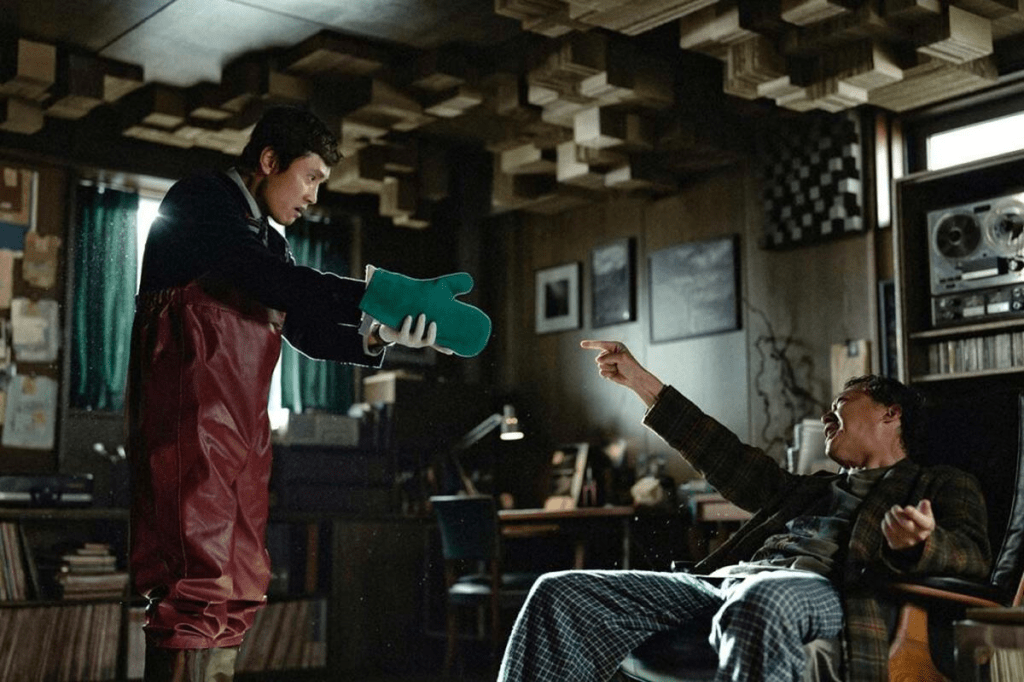
As much as I wanted to love the film even more, I suspect a second viewing may resonate with me better. I went in with the wrong expectations, anticipating something like Parasite 2.0. While the film does share certain universally relatable themes, it ultimately forges its own identity—sometimes resulting in a few clunky transitions as it shifts from dark drama to comedic thriller.
I understand what the film is aiming for in its third act: illustrating how little truly changes and how we remain trapped in cycles of competition, repeating the same struggles again and again. However, this section feels somewhat drawn out compared to the rest of the film. The first two-thirds move with a cutthroat, electric pace, whereas the final stretch lingers longer than necessary once its message is already clear. Still, knowing where the story goes and how it subverted my expectations, I suspect a rewatch—perhaps after awards season—might deepen my appreciation for what the film is doing.

Overall, No Other Choice is a film that will linger long after the credits roll. Any award recognition it receives would be well-deserved, thanks to its poignant themes, exceptional performances, and stunning visuals. While the pacing may pose the film’s biggest challenge, it never diminishes the lasting impression it leaves.
VERDICT: 4/5 – Great
 The Creative Cinematic Collection
You must be logged in to post a comment.