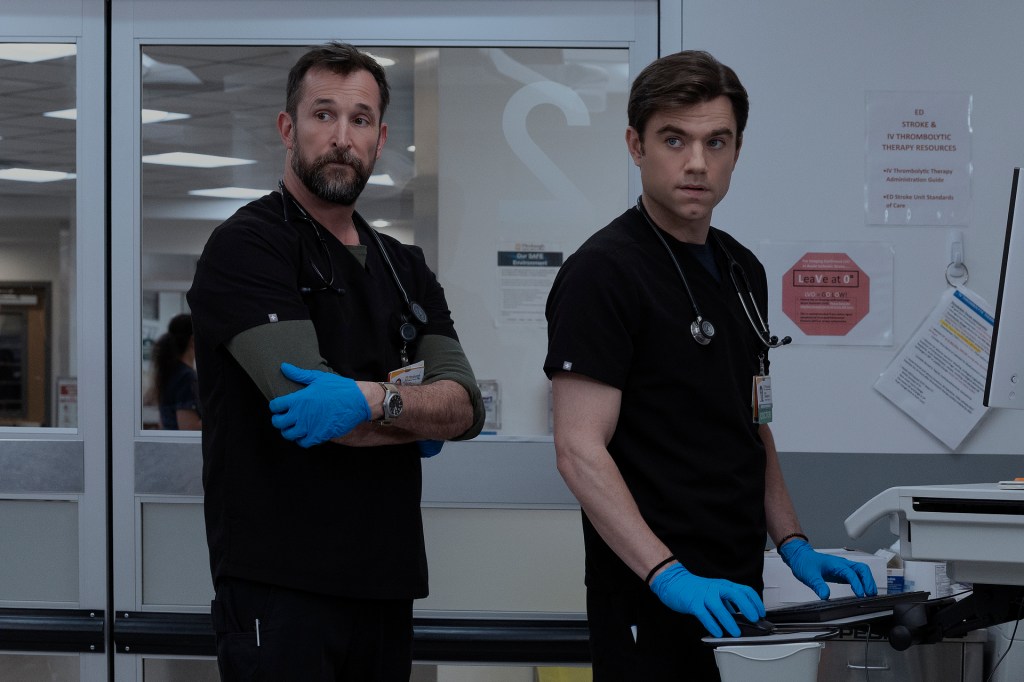
Where episode 3 was the funniest installment yet and episode 4 stood as one of the strongest episodes of the series, episode 5 may ultimately be remembered as its grossest. And yet, nearly everything in this episode is vital. Whether it’s deploying shock humor or deepening character work, the episode makes it feel as though every unsettling moment serves a purpose. None of the grotesque elements exist purely for spectacle; each one carries narrative or emotional weight.
Picking up directly where the previous episode left off, the story opens with the return of the infected waitress, her condition having noticeably worsened. From episode 4 onward, it’s been clear that this incident is meant to be the catalyst that pulls Robby and Langdon back into each other’s orbit. No matter how determined Robby is to keep his distance, the universe seems intent on forcing their paths to cross again. And while that expectation appears straightforward, the episode consistently finds ways to subvert it, steering the story in directions that feel surprising yet purposeful.
The rift between Robby and Langdon only widens in this episode, with Langdon’s frustration becoming increasingly apparent. It reaches a point where he pulls Dr. Al-Hashimi into the situation, escalating the conflict in an unexpected way. While this does technically bring Robby and Langdon back into the same space, it isn’t until the episode’s final moments that it becomes clear they’ll be forced to work together—this time to help Louie. I suspected something bad was going to happen to Louie, but not in the way the show ultimately delivered it. Beyond its thematic weight, this kind of expectation-subversion is one of the main reasons I love the series.
Dr. Al-Hashimi’s involvement also serves as a crucial catalyst for character development. Through her, we learn more about what drives the people around her—starting with the revelation that she has a son. The fact that she mentions him without ever referencing a husband is telling, and it subtly opens the door to the possibility of a deeper connection between her and Robby. Additionally, the episode expands on her perspective on AI, clarifying why she holds such strong views and prompting Robby to voice his own internal conflicts more openly.
I understand why Robby is about to go on a trip, though honestly, he probably should’ve taken one immediately after everything that happened in the first season. The guy is clearly unraveling. I can’t say I blame him, but his spiraling is creating even more tension in the workplace. At the same time, the episode leans into what makes Robby such a compelling character—his blunt honesty. When the infected waitress is being examined and her boss calls to threaten her with termination, Robby takes the phone and fires back, promising to testify on her behalf when she sues for wrongful termination before hanging up. It’s one of Robby’s strongest moments in the series.
Still, that moral clarity doesn’t extend to everything he does. His actions toward the patient near the end of the episode ultimately give her what she needs, but the way he goes about it is undeniably reckless. He even grabs a beer at one point, which raises the question: is this really the same Robby we met in the first season?
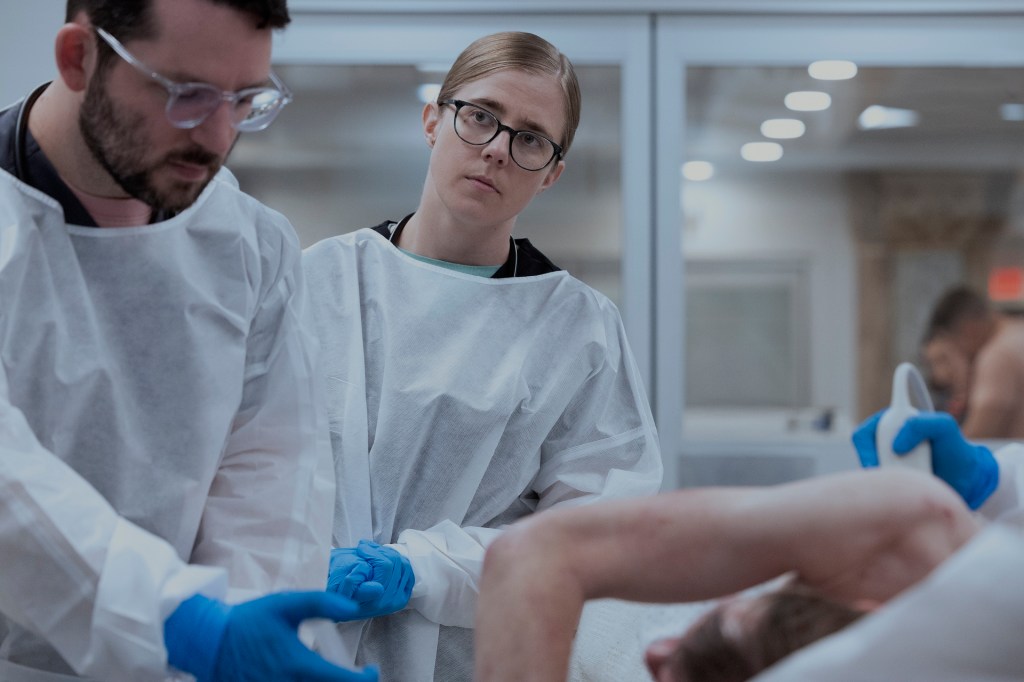
As mentioned earlier, this is easily the grossest episode of the series so far. I usually have a high tolerance for on-screen grossness—it’s not hard for me to separate fiction from reality—but this episode genuinely got under my skin. I was very glad I wasn’t eating while watching it. One particularly memorable moment involves the student doctor James Ogilvie getting covered in something unpleasant, echoing what happened to Whitaker in the first season. That parallel works nicely, highlighting how much growth Ogilvie still has ahead of him.
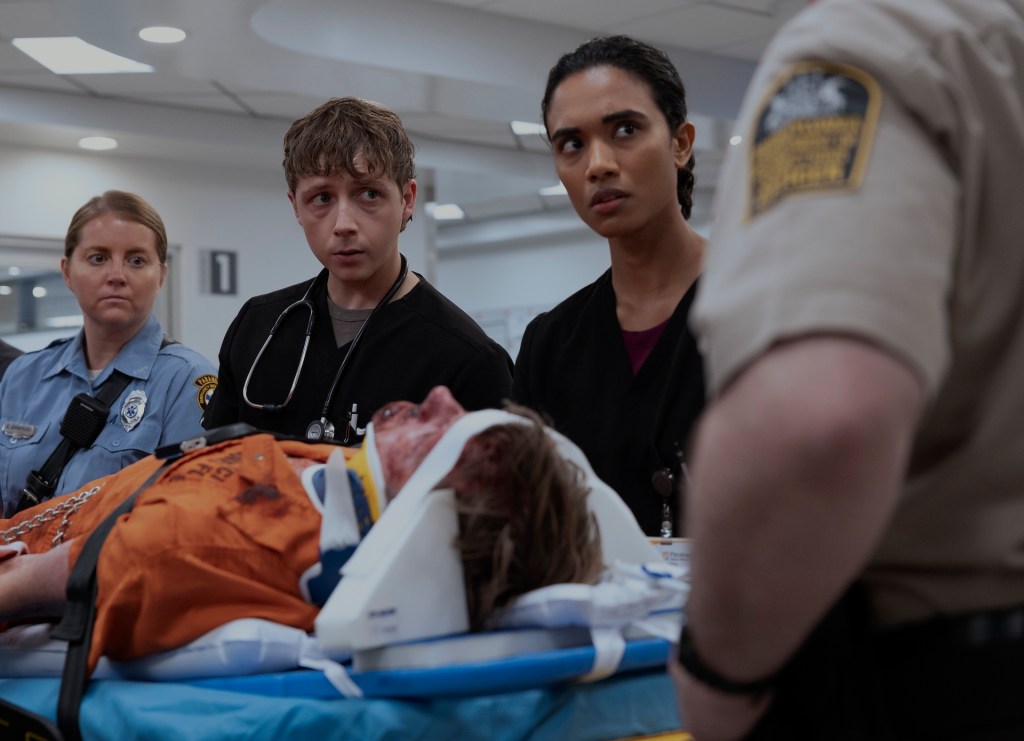
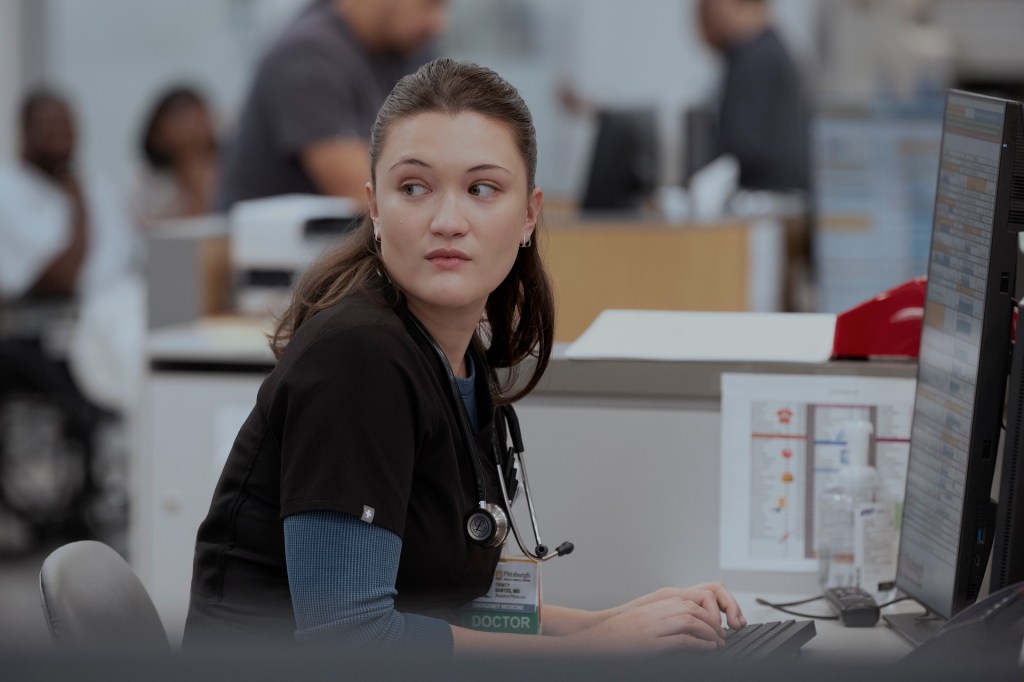
While the remaining characters continue to grow, the episode maintains a careful balance that allows each of them a moment to shine. Dr. Mohan keeps improving at managing the many responsibilities placed on her, while Dr. Santos once again works to prove herself, much as she did in the first season. This time, however, it feels less about external validation and more about finding her inner confidence in order to become better at her job. Meanwhile, Dr. McKay, Dr. King, and Dr. Javadi all continue to excel in their roles, even as they navigate challenges in their personal lives.
At just 44 minutes, this is one of the shortest episodes so far, but it never feels lacking. The episode doesn’t need extra runtime to succeed—it simply needs to do what the show does best: fully immerse the audience in its real-time format, making every minute feel tangible. What stood out to me most was the deliberate use of the camera, particularly the extended one-take sequences that seamlessly introduce and develop a subplot. This stylistic choice highlights the strength of the direction and reinforces the idea that the hospital never slows down, even when the focus shifts to a single storyline.
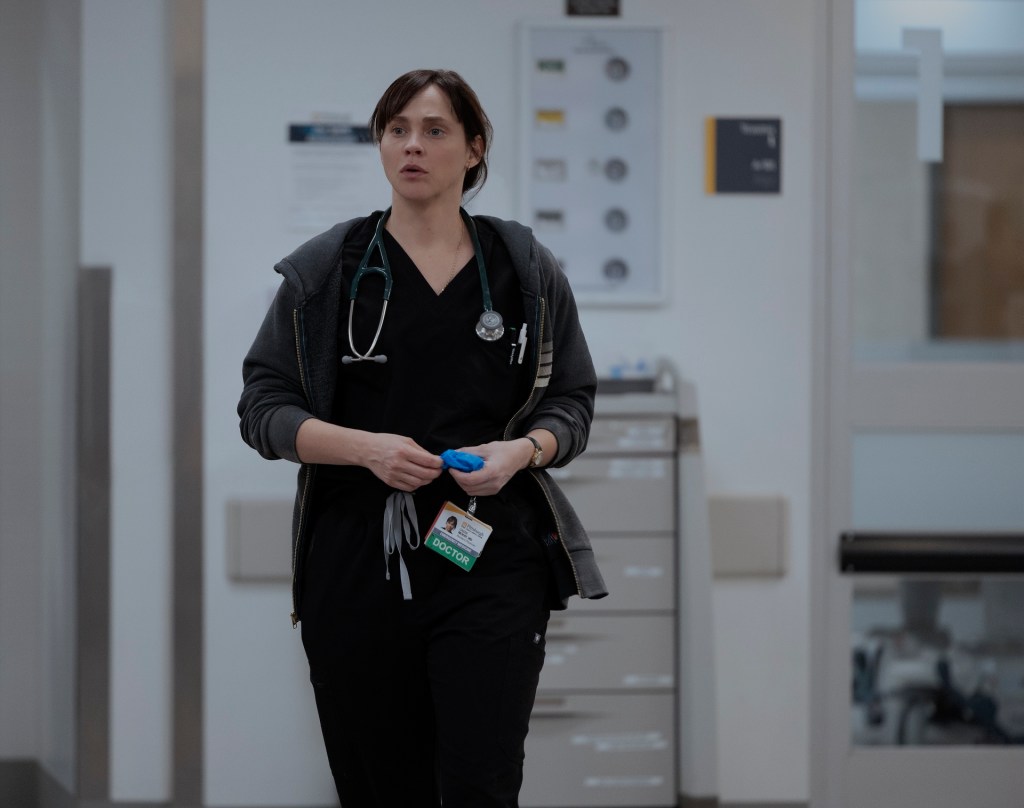
Overall, episode five of season two of The Pitt is guaranteed to gross out just about everyone. What the episode accomplishes, however, is a testament to the level of care and attention to detail shown by both the cast and crew. It may be one of the shortest episodes to date, but every minute feels purposeful and immersive. This season is clearly charting a different course than the first, and while there’s no topping that initial run, the series continues to find compelling ways to keep fans like me fully invested.
 The Creative Cinematic Collection
You must be logged in to post a comment.