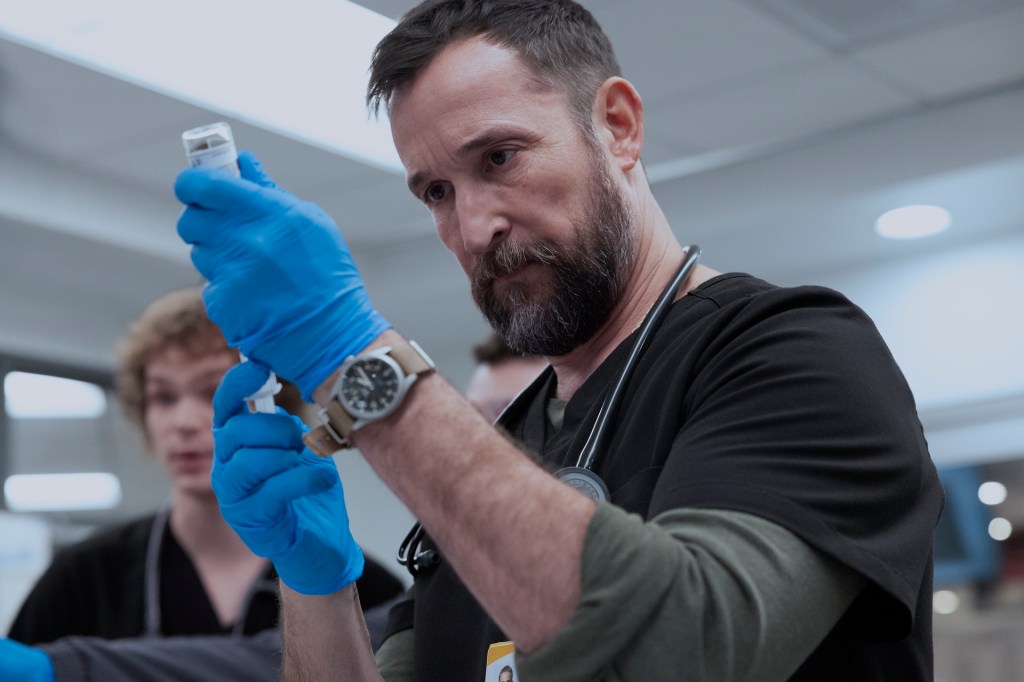
Episode 8 of The Pitt’s second season continues to raise the bar. From its sharp medical accuracy to major character reveals and shocking developments, it’s clear this season is shaping up to be one of the show’s most memorable yet.
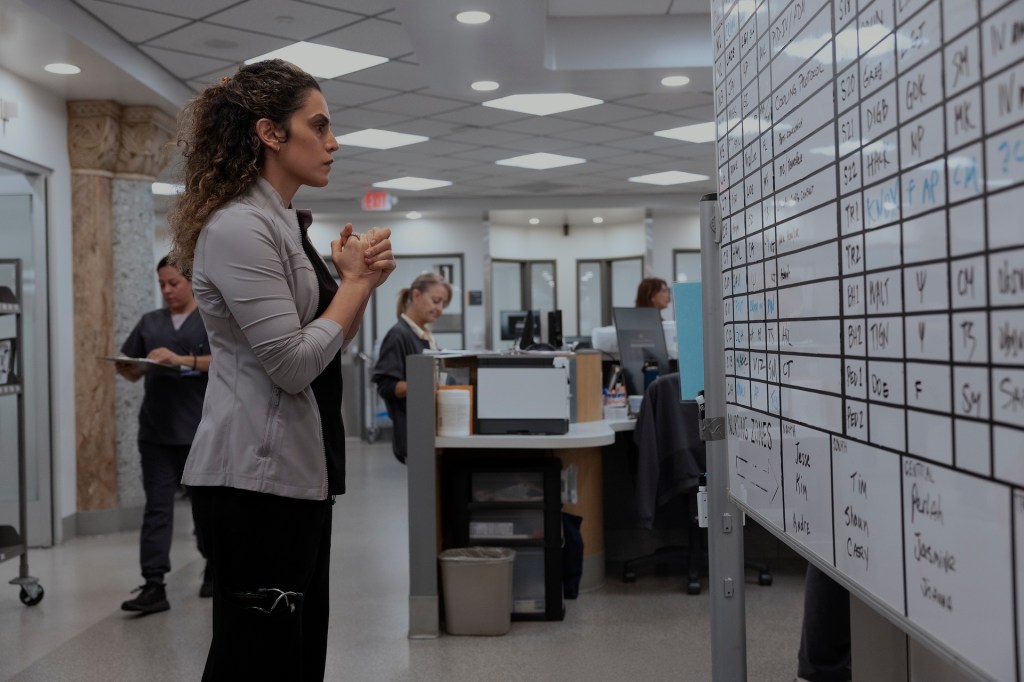
The episode wastes no time, plunging viewers straight into chaos as the ER is forced to go fully analog to prevent a cyberattack. Dr. Robby is understandably furious with Dr. Al-Hashimi, only to learn she has formal training in cyberattack prevention and response. Still, their growing tension intensifies, especially as Dr. Robby begins to feel increasingly sidelined in his own ER. While IT scrambles to reinforce hospital defenses, the staff prepares to operate without digital systems for up to 24 hours—on one of the busiest days of the year.
That blurry photo Whitaker snapped of the board in the previous episode? Completely unusable. Thankfully, Joy Kwon steps in with a game-changing revelation: she has a photographic memory. It’s exactly the lifeline the department needs, and she continues to cement herself as a standout addition to the ensemble.
Meanwhile, with Dana Evans still handling the fallout from last episode’s sexual assault case, Princess is thrust into the role of charge nurse. The added responsibility would be daunting under normal circumstances—doing it while the ER runs analog makes it even more challenging. A moment of levity slips in when Dr. Santos jokingly asks Dr. Al-Hashimi whether her AI program can help, earning a chuckle from Dr. Robby.
The relentless intensity recalls the chaos of the Pittfest shooting storyline, though this crisis arrives much earlier in the season. For viewers craving a fast-paced, high-stakes arc, Episode 8 delivers in full. And at this rate, it’s hard to imagine any of these characters clocking out peacefully at the end of their 12-hour shift.
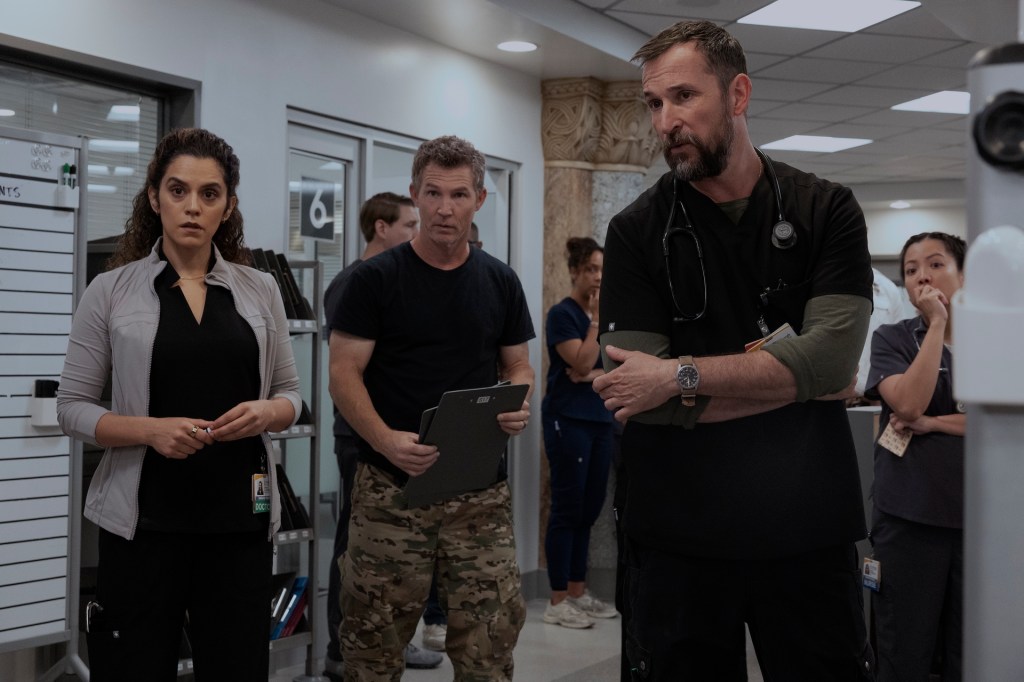
Dr. Santos circles back to her deaf patient, deepening what has quietly become one of the season’s most resonant storylines. What initially felt like a smaller character beat is now revealing its long-term weight. The opening episodes have clearly been laying careful groundwork, planting narrative seeds that are only now beginning to take root. In fact, this season feels primed for a rewarding second viewing—one where viewers can catch the subtle setups and layered character moments that may have been overlooked the first time.
When the next case arrives, the staff instinctively reaches for technology that is no longer available. Though they remain capable physicians, the sudden loss of digital support exposes just how dependent they’ve become on it. Practicing medicine without those systems forces them to adapt in real time—essentially relearning parts of a job they thought they had already mastered. The discomfort is palpable, and it adds another layer of tension to an already volatile shift.
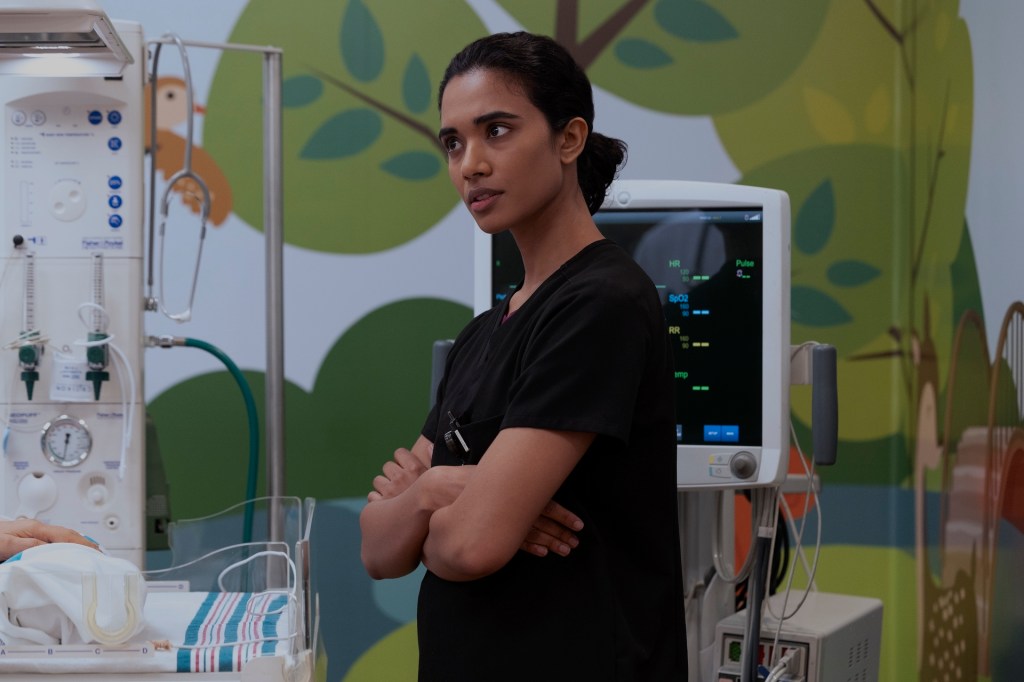
Meanwhile, James Ogilvie continues to double down on his arrogance. He speaks with a confidence that borders on obliviousness, seemingly unaware—or unwilling to acknowledge—the impact of his words. It’s not necessarily malice, but a lack of emotional calibration in an environment that demands collaboration. His exchange with Javadi hints at an inevitable reckoning. If he’s going to survive—and thrive—in this ER, learning to work alongside others rather than above them may be the growth arc that defines his season.
As the team works on their first patient, Dr. Al-Hashimi gets called for a patient who has had sudden blindness. Dana continues working with the sexual assault victim. Dr. Abbot’s character has appeared to have exited the story already, but may come back towards the end. There are moments where these characters are getting a little bit of satisfaction in the work they are doing. However, that is short-lived. When Dana goes to drop off the current rape kit, she sees that another one has been in there for about a week. Her frustration is certainly making Emma nervous. Will she continue to come back and prove her worth, or see how bad it is for Dana and not return? It will be interesting to see how that plays out.
An important revelation involves Dr. King with her deposition. Maybe I didn’t realize it before, but they make it abundantly clear that this deposition involves the boy who got the spinal tap in the season one finale. What a brilliant way to show the fallout of the situation. It feels so real to what could happen. Considering we all see what Dr. King did, we have even more reason to root for her. It makes complete sense why she’s so nervous.
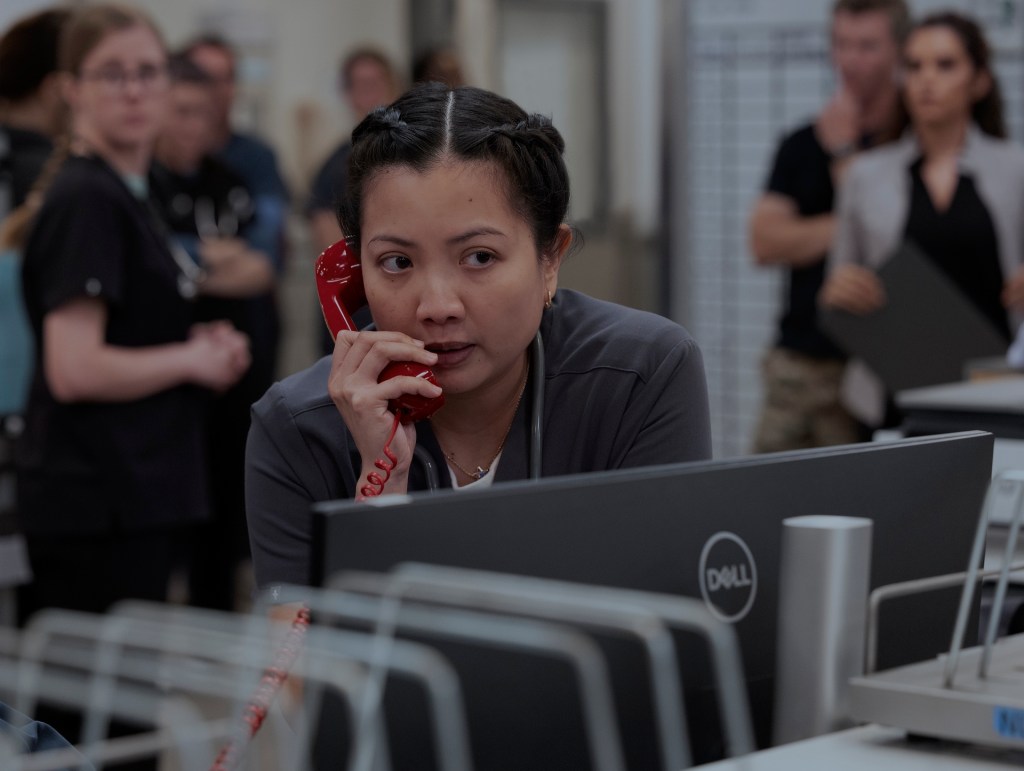
Just as the previous episode forced a tense confrontation between Dr. Robby and Dr. Langdon, this hour shifts focus, giving us our first significant interaction of the season between Dr. Langdon and Dr. Santos. Langdon feels noticeably different this time—more guarded, more deliberate—particularly in his scenes with Santos. She, in turn, is visibly anxious. Given her history of childhood abuse and the trauma surrounding her leg injuries, her hesitation makes perfect sense. She’s careful, measured, clearly unwilling to escalate an already fragile dynamic.
For Langdon, the pressure is mounting. Between Robby’s scrutiny and Santos’ unease, he seems increasingly aware that he must prove them wrong if he wants to keep his place in the ER. The only reprieve? He appears to have McKay & Dana in his corner—for now.
At just 45 minutes, some viewers may initially feel shortchanged, especially after recent episodes began stretching longer. Yet the episode’s pacing more than compensates. The writing skillfully juggles multiple storylines without losing momentum, layering tension so effectively that the runtime becomes irrelevant. Rather than watching the clock, you feel the pressure building, scene by scene, with the sense that everything could unravel at any moment.
The episode closes on a cliffhanger—not with a jaw-dropping twist, but with a mounting sense of chaos as the ER grows busier and more volatile. With so many threads still unresolved, the hour doesn’t shock so much as it tightens the vice, leaving viewers restless and impatient for what comes next.
Overall, I’ve genuinely enjoyed the first three episodes of the season. They felt different—quieter in some ways, more deliberate—but still compelling. Over the past five weeks, as the tension has steadily escalated, the series has begun to feel more and more like the version of The Pitt that audiences fell in love with. The stakes are higher, the pacing sharper, and the emotional beats more resonant.
The season’s major reveals don’t just shock—they deepen both characterization and long-running plotlines. Every revelation feels purposeful, adding layers rather than simply raising volume. Watching the ER staff function without technology only heightens that respect. It’s hard to imagine doing any job—let alone medicine—without the digital systems we rely on daily. And that’s precisely why I’m not a doctor. Time and again, these characters make the impossible feel achievable, reminding us why we root for them in the first place.
 The Creative Cinematic Collection
You must be logged in to post a comment.