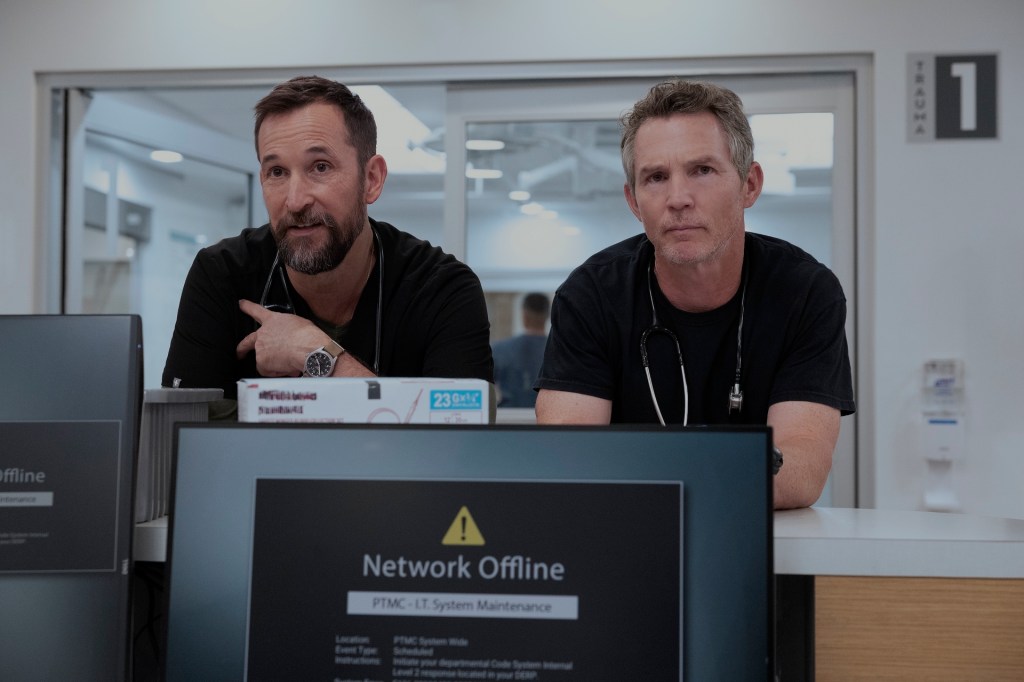
It’s fascinating to finally reach the episode where most critics had to stop. When early reviews of the new season began rolling out, they were based on only the first nine episodes. Watching a few days ahead puts me in a fortunate position—because if I’d had to sit with that ending for months, the wait for what comes next would have been agonizing.
Although it’s unmistakably the same show, this season has carved out a distinct identity from the first. Much of that shift comes from the spaces the story inhabits. We’re seeing a different side of the ER—new rooms, new dynamics, new pressures. Even when Dr. King steps away for her dissertation, the heart of the series remains firmly rooted in the emergency department. More than ever, the season feels like a love letter to the people who do this work every day.
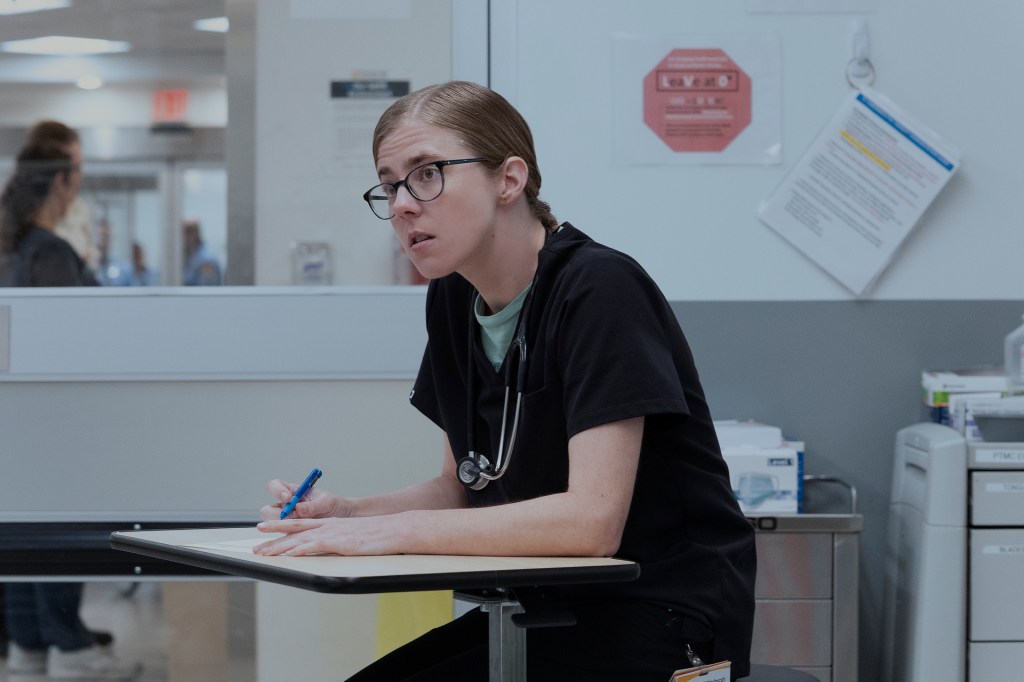
Compared to the first season, Dr. Robby is in a markedly different headspace. He appears more composed and focused in the ER, less tethered to his past—but that new steadiness may be masking something more self-destructive simmering beneath the surface. The return of Dr. Abbot brings that tension into sharp relief. Their interaction reveals a side of Dr. Robby we haven’t quite seen before, and it’s genuinely interesting.
I was surprised—not only by Dr. Abbot’s return, but by the revelation that Shawn Hatosy directed the episode himself. It’s an exciting choice. When cast members step behind the camera, they bring an intimacy and lived-in understanding of the material that can elevate a story in unexpected ways. Hopefully, more of the ensemble will have the opportunity to direct in the future; their on-the-ground perspective has the potential to give each episode a distinct and personal edge.
A lot unfolds in this episode. It becomes unmistakably clear that Dr. Santos and Dr. Garcia are involved in some kind of casual relationship. Looking back at the moment earlier this season when Dr. Santos sang to the baby, it reframes how we might interpret her hopes for the future. At the same time, the reveal of the scars on her legs adds a layer of unease—especially if this relationship were to fall apart. And I certainly didn’t expect her to end up with someone she once accidentally stabbed in the foot.
Javadi makes one of the most significant mistakes of her career so far, setting the stage for compelling character growth. Robby, meanwhile, has a pointed conversation with Whitaker about the person he’s been quietly helping on the side, and we see him open up more with both Whitaker and Langdon than he has before. Langdon, too, gets meaningful development that genuinely suggests he may be turning a corner. It’s impressive how much the episode accomplishes within a tight runtime. With an even larger ensemble this season, the show continues to balance its characters remarkably well—especially given that nearly everyone is in constant motion.
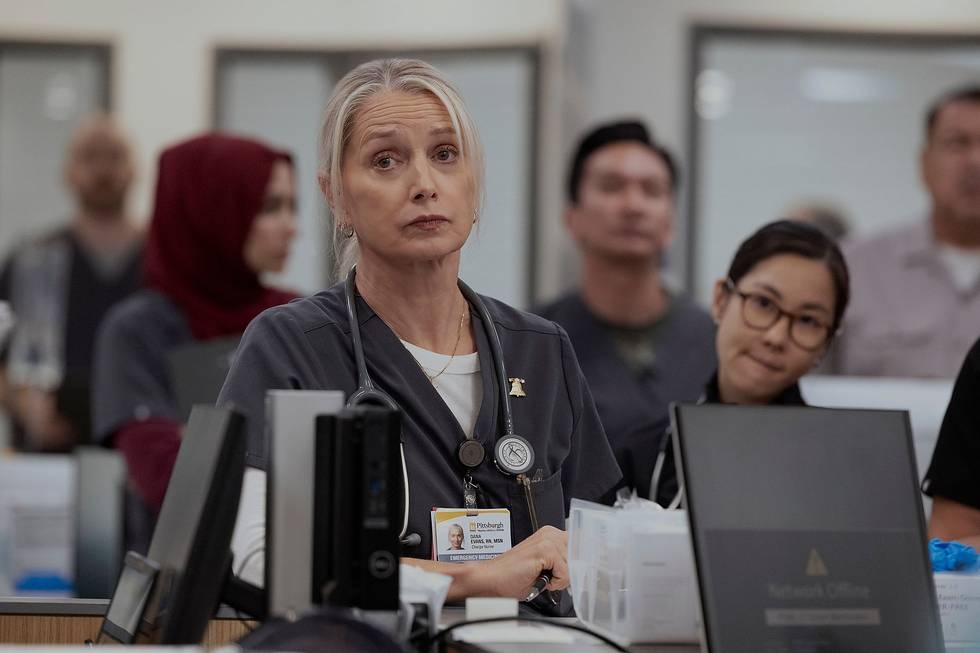
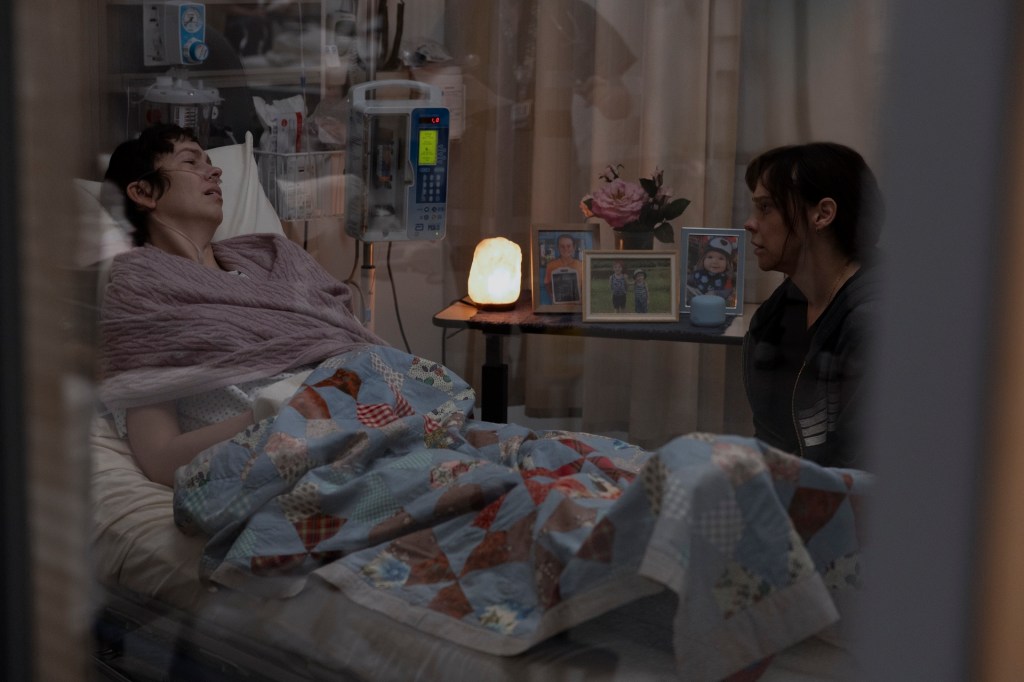
This is easily one of the most brutal episodes the series has delivered so far. The scene with the young boy who blew up his hand with fireworks is viscerally upsetting—one of those moments that makes your skin crawl. The immigration storyline involving the same child adds the kind of layered perspective the show’s creator previously alluded to, grounding the drama in real-world complexity. Paired with the cancer patient’s arc, the emotional weight becomes almost overwhelming. You can sense where these stories might be headed, but that doesn’t make them any less heartbreaking. It’s arguably the saddest episode since Louie’s fate.
And, of course, it wouldn’t be an episode of this show without a final, jaw-dropping twist. While nothing quite matches the sheer shock of the Pittfest shooting reveal, this closing moment comes close. Just as the staff finally seems to be stabilizing the chaos and nearing the end of their shift, the rug is pulled out from under them once again. With the hospital still operating on analog systems, you can only imagine how much worse this is about to make an already grueling day.
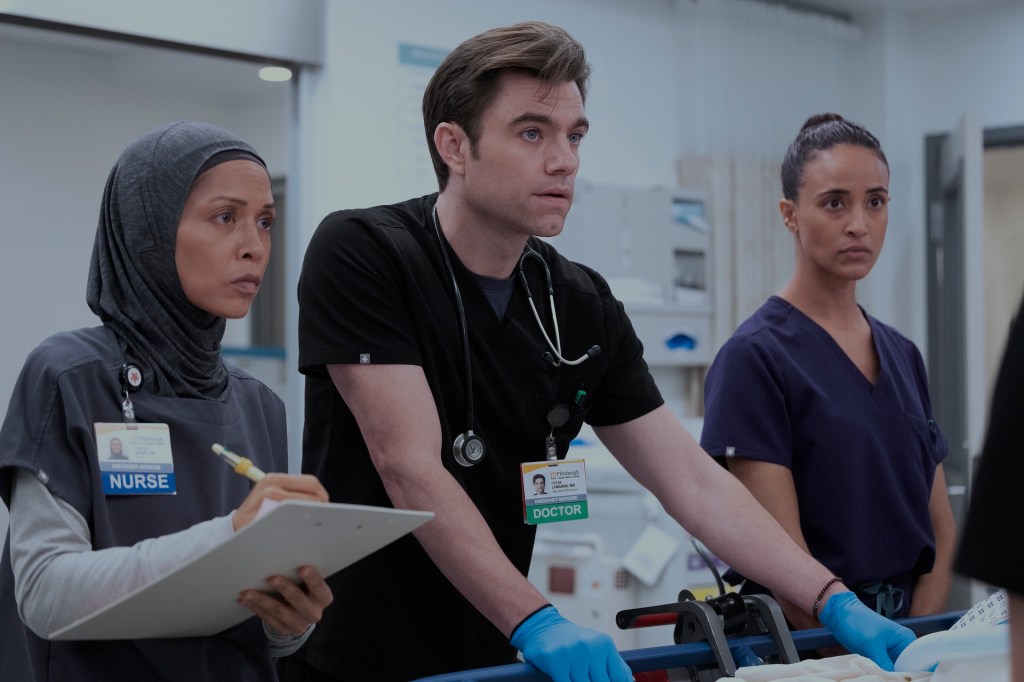
Overall, this is another outstanding episode. While the first season still stands as the benchmark, this one is inching remarkably close to matching it. The series continues to juggle its expanding ensemble and overlapping storylines with a level of precision that feels rare, if not unmatched. More importantly, this episode underscores the show’s commitment to tackling meaningful, real-world issues in a way that invites empathy rather than division. By weaving these themes organically into its character-driven storytelling, it creates space for viewers to connect through a shared understanding—something the series does better with each passing week.
 The Creative Cinematic Collection
You must be logged in to post a comment.