The Smashing Machine is a new film set to release in theaters October 3rd. It initially premiere at this year’s Venice International Film Festival where it won the Silver Lion. Written, directed, co-produced, and edited by Benny Safdie, the film stars Dwayne Johnson, Emily Blunt, Ryan Bader, Bas Rutten, and Oleksandr Usyk. The story of legendary mixed martial arts and UFC fighter Mark Kerr.
I grew up watching Dwayne Johnson back when he was known as The Rock. As a kid, I enjoyed his movies, but over time, he seemed to lose some of the charm that made him such an appealing actor. That changed when I saw his performance in Ballers—it made me reevaluate his work from a new perspective. He fully commits to his roles because he genuinely wants to entertain. With his recent box office numbers declining, it’s understandable that he’s looking to take his career in a new direction. A role like this feels like a natural evolution—something I always believed he was capable of.
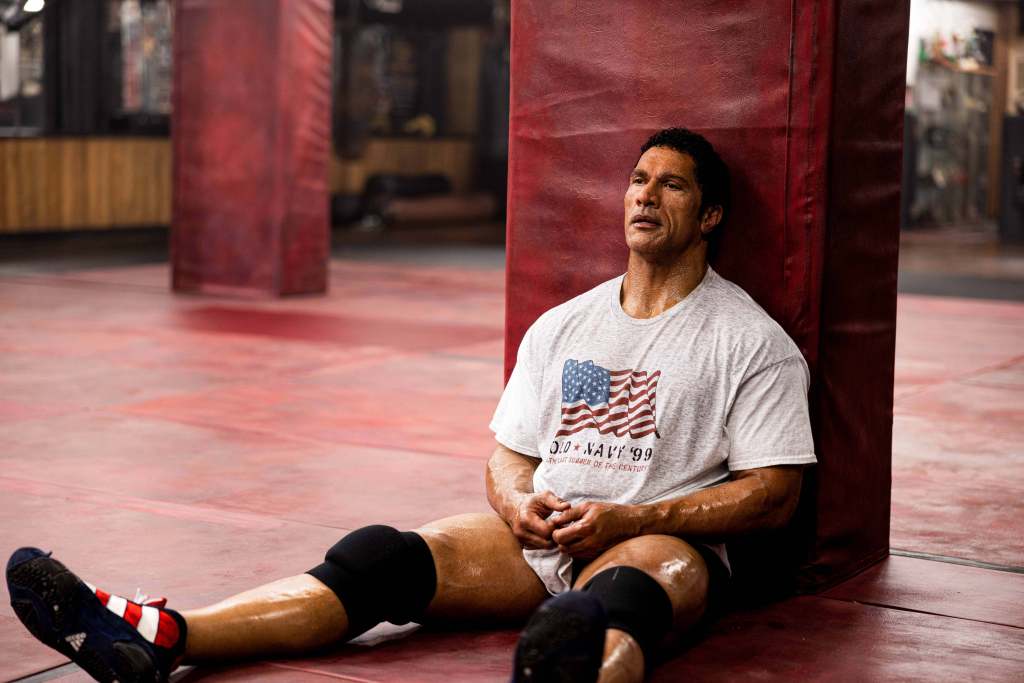
I felt like one of the few people who welcomed the Safdie brothers going their separate ways for their next projects. They’ve done impressive work together in the past, but why not explore what their individual visions and styles look like? Benny Safdie’s latest effort earned him the Silver Lion at this year’s Venice International Film Festival—and deservedly so. He has a knack for drawing out raw, emotionally charged performances from his actors. In this film, he brings real depth to the two main characters, played by Johnson and Blunt. Both are portrayed with a balance of strengths and flaws, and it’s clear that Benny is reaching for something deeper—using the performances to enrich the story itself.
At the time of writing, the film holds a 76% on Rotten Tomatoes—a number that I think reflects how it will ultimately resonate with wider audiences. This is a film driven entirely by its performances, with the story unfolding through the emotional weight of its characters. For Dwayne Johnson, it’s a long-overdue opportunity to showcase the full range of his talent and make a clear, bold statement: he’s not going anywhere. I’m genuinely excited to see where he goes next. Emily Blunt, one of my favorite actresses working today, brings her usual depth and nuance. While she and Johnson previously shared the screen in Jungle Cruise, their chemistry here feels completely different—more grounded, more vulnerable. You can sense the trust between them, allowing each to take emotional risks. Johnson may command the spotlight, but Blunt helps steer the story toward something much deeper—particularly in how the film explores themes of mental health.

If you’re going into this film purely for the sport, you’ll find some entertainment value—but that’s clearly not its primary focus. In a surprising move, the film avoids diving into Mark Kerr’s background. We’re not told why he started fighting, nor are we given much context about his relationship with his partner. Instead, that context unfolds gradually through the performances and storytelling. While some may dismiss the film as uneventful, there’s a deeper layer Benny Safdie is uncovering—one that taps into the psychological toll of the sport and its connection to mental health.
What I appreciated most about the film is that no one is clearly right or wrong—everything exists in a moral gray area. When we’re first introduced to Mark, it’s hard to believe that someone so kind and laid-back could be a fighter. But as the story unfolds, it becomes clear he’s putting on a façade—both in life and in the ring. He’s learned that wearing a mask is part of what makes him successful. Then we meet his partner, Dawn. Though she plays the role of the girlfriend, she could easily be mistaken for his wife, given how much she invests in supporting him. But Mark takes advantage of her care. It’s with Dawn that he lets his guard down, revealing a side of himself that’s just as harsh as it is wounded. At times, the way he speaks to her almost feels like he’s addressing his own mother. It’s clear that Mark never had the chance to fully be a child, and fighting has become his way of coping with the trauma he’s carried for years.

One thing I’ve always appreciated about any Safdie film is how the look and sound can transport you to a bygone era. Set in the late ’90s, this film feels so authentic that you might mistake it for something actually made during that time. Honestly, it wouldn’t be surprising if they released it on VHS—it would fit right in. It’s also admirable when a director takes on the editing themselves, as Benny Safdie does here. He not only captures the period with precision, but also experiments with the film’s structure. While that adds a unique rhythm, it does impact the pacing. The first two acts jump through time, but it’s handled smoothly enough. It’s the third act where things get a bit chaotic, as the story rapidly shifts between Japan, Arizona, and California. The fast transitions can be disorienting and may feel overwhelming during the film’s emotional climax.
When set photos first surfaced online, revealing Dwayne Johnson in character, I could hardly believe what I was seeing. Even now, after watching the film, it’s still hard to recognize him. From his voice to the transformative makeup, he completely disappears into the role of Mark Kerr. You can sense how hungry he is to be taken seriously as an actor. Emily Blunt, too, conveys so much through subtle choices—her wardrobe alone speaks volumes about her character’s desires and inner life, without the need for heavy exposition. This is a film deeply committed to detail, using everything from costume design to performance to not only transport you to a specific era, but to help you truly understand these characters.
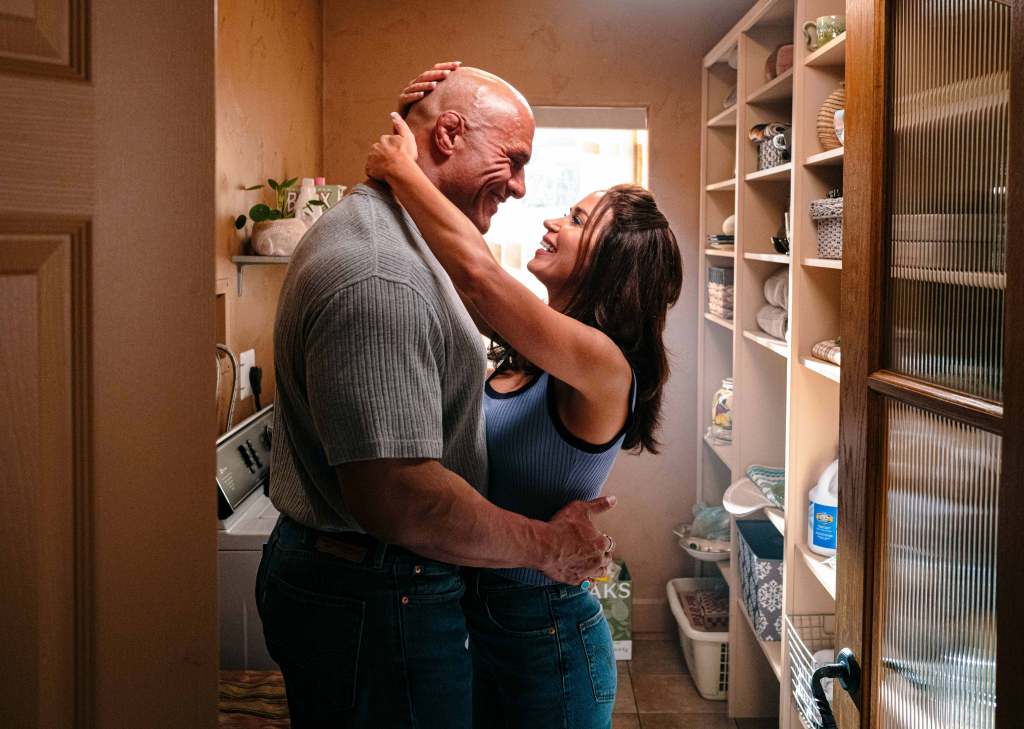
Overall, The Smashing Machine is an impressive showcase of direction, performance, and thematic depth. It has a lot to say about the sport, but more importantly, it brings a striking level of humanity to its characters. While the drama and unconventional structure may not be for everyone, it delivered exactly what I was hoping for. I can easily see myself revisiting it and discovering new layers in the characters each time.
VERDICT: 4/5 – Great


 The Creative Cinematic Collection
You must be logged in to post a comment.