Blue Moon is a new film set to release in limited theaters on October 17, followed by a wide release on October 24. Written by Robert Kaplow and directed by Richard Linklater, the film stars Ethan Hawke, Margaret Qualley, Bobby Cannavale, and Andrew Scott. Set on the evening of March 31, 1943, the story follows legendary lyricist Lorenz Hart as he confronts his shattered self-confidence at Sardi’s bar, while his former collaborator Richard Rodgers celebrates the opening night of the groundbreaking musical Oklahoma!.
Even as a longtime fan of both Richard Linklater and Ethan Hawke, I’m almost embarrassed to admit I had no idea this film existed until I caught the trailer in theaters a few months ago. I was already aware that Linklater had a film coming to Netflix this year called Nouvelle Vague, but not this one. As the trailer played, I thought: Wait — Ethan Hawke is in this? And why is a Netflix film getting a theatrical trailer?
Add to that the news that Linklater is still directing Merrily We Roll Along—a project filming over the next 15 years—and it seemed almost impossible that he’d have another full film ready to go. But that’s always been the magic of Linklater. The fact that he continues to turn out thoughtful, compelling work—Blue Moon included—at such a consistent pace only reinforces why he remains one of the best working directors today. And what better way to celebrate that than with a new film featuring Ethan Hawke in one of the year’s best performances?

Even though I typically try to avoid trailers, I’m glad I caught this one — it ensured Blue Moon landed on my watchlist. The cozy, warm atmosphere that Linklater creates here feels like the kind of film you’d want to catch in theaters over winter break. What I didn’t expect (and was pleasantly surprised by) was that the film is structured like a play. I love films with that kind of theatrical framing — it’s a style I consider a dying art form that deserves far more appreciation, especially with the amazing production design that this one delivers. Give me more of them.
You also have to consider how incredibly busy both Linklater and Hawke are in their respective careers. Linklater has two films coming out this year, with another (Merrily We Roll Along) in production over the next 15 years. Hawke, meanwhile, has three films releasing this year, including Blue Moon. And yet, neither of them ever seems to show signs of slowing down. The energy and creative output from both is remarkable — and it’s fully on display here.
Given how packed Hawke’s schedule is, the fact that he can handle the density of dialogue in this film is nothing short of impressive. The role demands as much from his silences as it does from his words — and he delivers both with equal weight and precision.

The film opens with its conclusion — a storytelling choice I don’t usually enjoy. Often, when a film reveals the ending first, it drains tension from everything that comes before. But that’s not the case here. Without giving too much away, the opening firmly establishes the fate of the character, and instead of weakening the narrative, it adds emotional weight to the journey that follows. As the film rewinds to show us just one night in this character’s life, we come to understand so much about who he is, what he wants, and what he’s lost.
Through Ethan Hawke’s performance as Lorenz Hart, we see a man caught between deep longing and quiet isolation. He wants to be loved, but not in the way people around him are willing — or able — to offer. That tension makes the final moments all the more devastating. Hawke brings both the vulnerability and quiet ache of Hart to life with remarkable depth. It’s a performance that lingers.
On a personal note, as someone who’s dealt with depression and anxiety, I found this portrayal incredibly affecting. I’ve made progress in understanding and managing my mental health, but Blue Moon shows us a man who never quite finds that grip. Watching someone much older still lost in the same emotional fog was a rare and painful reflection of feelings I’ve often believed were uniquely mine.
The characters around Hart clearly care, and they’re trying their best to be kind — but you can also feel how Hart perceives himself as a burden. That emotional push and pull is devastating. It’s one of the few performances where I truly felt seen, and I don’t think many actors could’ve pulled it off the way Hawke does. He doesn’t just play the role — he disappears into it.
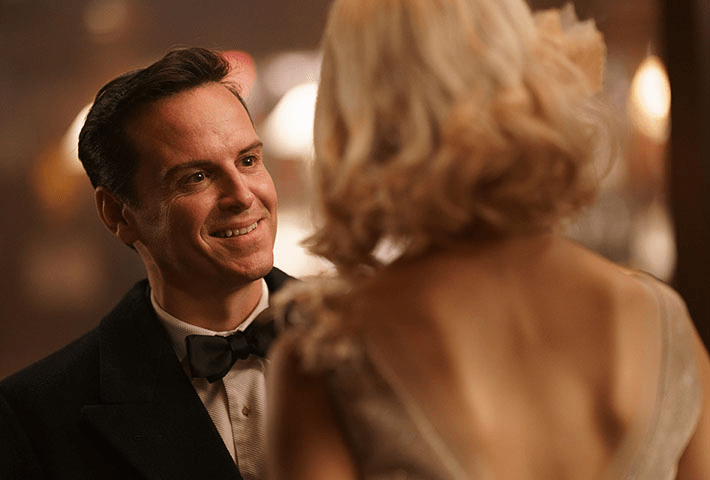
At just 100 minutes, the film somehow feels longer than its runtime suggests — though, for me, that’s not necessarily a bad thing. As I’ve mentioned, I enjoy films structured like plays, and Blue Moon leans into that format beautifully. Still, I can see how the slower pacing and extended scenes might not work for everyone.
Part of the issue lies in the film’s occasional repetitiveness. While I’m ultimately content with the runtime, there are moments — particularly in the dialogue — that feel stretched. Some conversations linger a bit too long, and Hawke’s repeated exits and returns to the bar start to feel slightly overused. Each time he says goodbye, he circles back again — a choice that clearly reflects his reluctance to be alone. While that speaks to the character’s emotional state, the message starts to lose impact through repetition. It’s effective, but perhaps driven home one or two times too many.
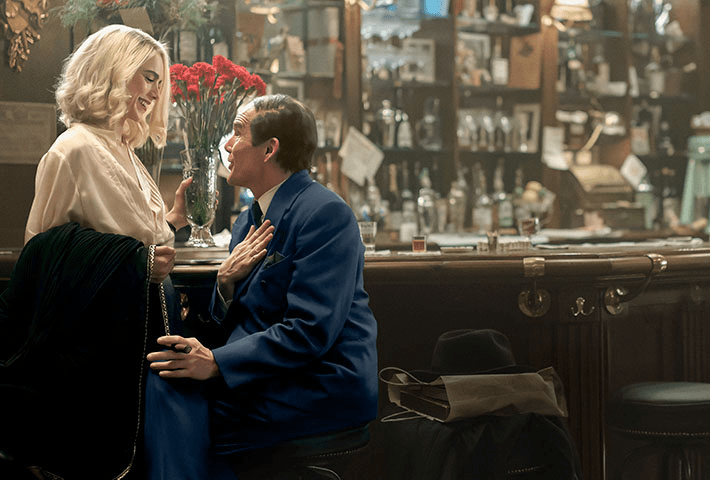
Overall, Blue Moon is a powerful film that rests on the strength of its dialogue-driven script, Richard Linklater’s dynamic direction, and Ethan Hawke’s incredible performance — a reminder of why he remains one of the greats. While its play-like structure and heavy focus on dialogue might not appeal to everyone, fans of character-driven stories will likely find a lot to appreciate here.
VERDICT: 4/5 – Great
 The Creative Cinematic Collection
You must be logged in to post a comment.