Shelby Oaks is a supernatural horror mystery film written and directed by film critic Chris Stuckmann, marking his directorial debut. The film premiered in 2024 at the Fantasia International Film Festival ahead of its wide release this coming weekend. It stars Camille Sullivan, Brendan Sexton III, Michael Beach, Sarah Durn, Robin Bartlett, and Keith David. The story follows a woman whose obsessive search for her missing sister draws her into a chilling mystery and the grasp of an unknown evil.
Here we are—Chris Stuckmann’s very first feature film.
I first discovered his YouTube channel back in 2015 or 2016, and his passion and dedication to film have stuck with me ever since. In fact, I can honestly say that if it weren’t for him, I wouldn’t be reviewing movies today—and I’m sure many other critics would say the same. He had a way of making film analysis feel natural and approachable, like there was room for everyone at the table.
I didn’t get the chance to support Shelby Oaks during its Kickstarter campaign, but even so, it’s been one of my most anticipated releases in recent years.
As for the film itself? Stuckmann clearly does the best with what he’s got—but ultimately, the limited budget keeps him from reaching the full potential of what Shelby Oaks could have been.

The central question surrounding Shelby Oaks is simple: Can Chris Stuckmann make a good film?
After years of reviewing and critiquing movies on YouTube, it would’ve been ironic if his debut turned out poorly. As I was leaving the theater, I overheard a couple discussing the film. The woman seemed to enjoy it, while the man dismissed it as awful. That moment summed up something important—Chris likely knows this movie won’t resonate with everyone. But that’s true of most horror films. They’re divisive by nature. Shelby Oaks leans into traditional horror tropes, offers bleak resolutions, and leaves some of its mysteries purposefully open-ended.
It’s clear that Stuckmann understands this isn’t a flawless film—but what he accomplishes with the tools he has should mark a major turning point in his career. The eerie tone, strong direction, and above all, the lead performance, form the foundation of something promising.
When I think of standout performances in directorial debuts, few come to mind immediately—but Camille Sullivan absolutely delivers one. With a budget of under $3 million, she gives a performance that feels like the role of her life. While the script may fall short in fully fleshing out her character, Sullivan fills in those gaps with depth and conviction, carrying much of the emotional weight. I’ll definitely be keeping an eye on her future work.
It’s also evident that Stuckmann has a genuine connection with this character, which makes her easy to root for. If this is how he handles leading roles in his debut, I’m genuinely excited to see what he can do next with even more experience and resources.
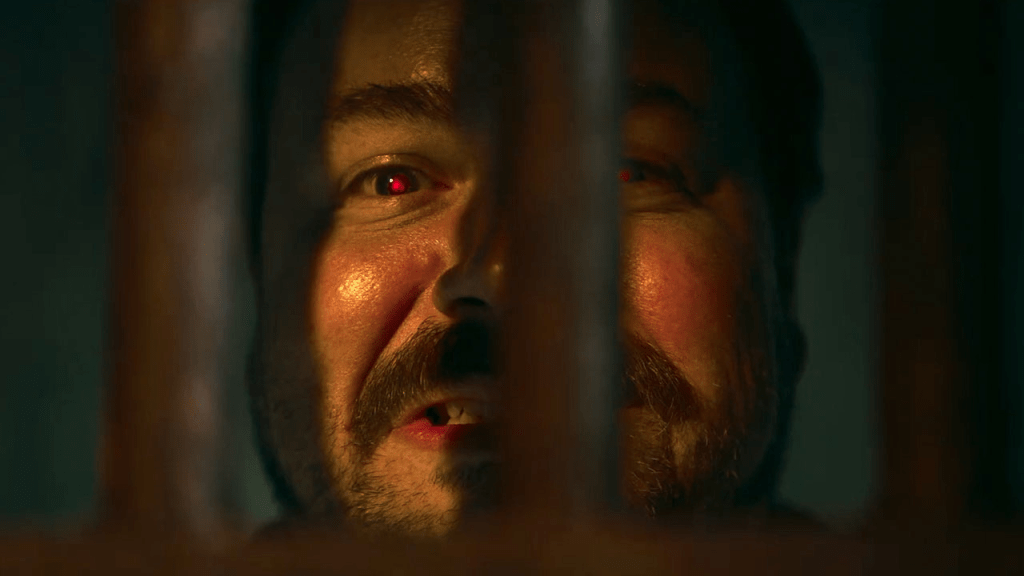
Chris Stuckmann has reviewed countless films across a wide range of genres. And while I can easily see him branching out into different styles as a director, it makes sense that he chose to debut with horror. It’s one of the more accessible genres for first-time filmmakers—affordable to produce, yet rich with creative potential. Given his love for cinematic spectacle, which is evident in many of his favorite films, Shelby Oaks fits right in.
I’m not sure how much changed once Neon got involved and increased the film’s budget, but what’s clear is that Stuckmann had a strong vision from the start. That vision comes through in the film’s eerie, unsettling tone and some genuinely compelling camerawork that keeps you locked in.
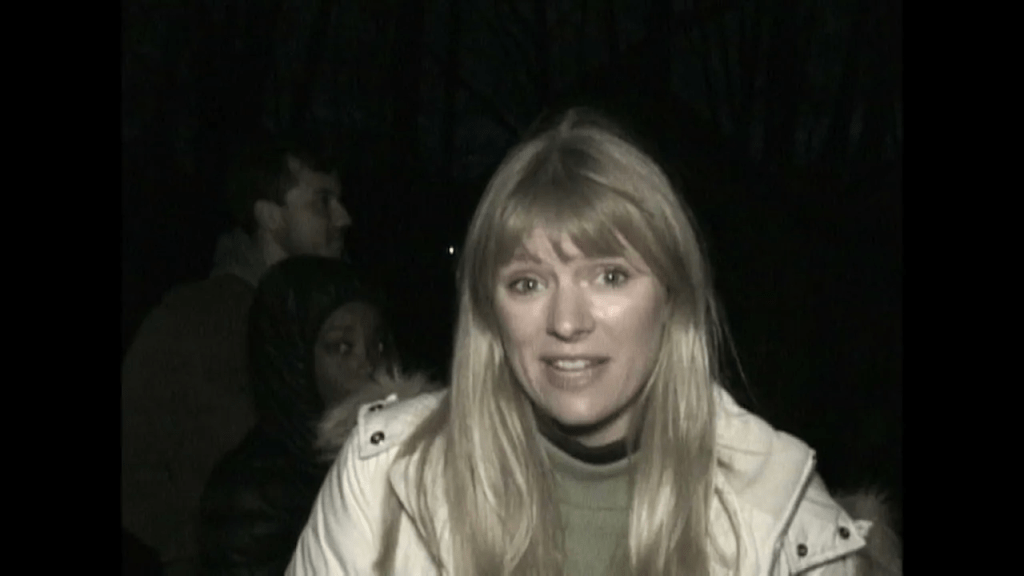
The film’s hybrid style—a mix of documentary and traditional narrative—proves to be a smart move. It delivers exposition in a way that feels organic rather than forced, while also helping Stuckmann establish a unique voice as both a storyteller and a filmmaker.
After a strong, captivating opening, however, the cracks begin to show. I can’t quite tell if it’s the result of budget limitations or if Stuckmann simply knows how to work within a small scope. The story centers on a woman searching for her missing sister. To focus on her journey alone, the script removes her husband from the picture—but in a way that feels abrupt and underdeveloped.
There was potential for his character to add meaningful tension. Maybe he could’ve been taken by the mysterious force, or there could’ve been conflict that led to their separation. Instead, despite being supportive early on, he just disappears from the narrative—likely a casualty of the film’s financial constraints.
While the documentary style works well and adds a unique texture to Shelby Oaks, it’s not without its flaws. It’s an effective tool for delivering exposition and pulling the viewer into the mystery, but it raises some questions. The documentary crew is present at the beginning, then disappears for most of the film—only to return at the end. It feels like a missed opportunity. Their continued presence could’ve provided a logical support system for the main character and made her journey feel less isolated in a natural way.
As I mentioned regarding the husband, his sudden exit lacks emotional weight. If something had happened to him—something tragic or supernatural—it would have given the protagonist a stronger, more urgent reason to go it alone. Her having “nothing left to lose” would have made her solitary journey more compelling and grounded in emotion.
The film makes excellent use of its sound design to build tension and unease. However, I sometimes felt like the sound was doing more heavy lifting than the visuals—almost as if it was trying to signal things the cinematography couldn’t quite capture. That said, the score is consistently effective, enhancing the atmosphere and keeping you engaged.
Maybe it was the nature of the mystery screening, but I genuinely expected the film to be longer. At just around 80 minutes without credits, I was surprised when it ended—it felt like there should’ve been at least 15–20 more minutes. That abruptness initially left me disappointed. But the more I sat with the ending, the more I appreciated it. It’s the kind of conclusion that lingers—bleak, haunting, and ambiguous in a way that invites discussion.
It makes sense that someone like Mike Flanagan is attached to this project—it shares his affinity for emotionally grounded horror with a slow-burning, atmospheric approach. And with so many subtle details layered throughout, Shelby Oaks feels like a film that would reward a second viewing.

Overall, I’m genuinely impressed by what Chris Stuckmann has achieved with Shelby Oaks. Camille Sullivan delivers one of the standout performances of the year, the documentary-style approach works well to deliver exposition, and the film maintains an unsettling, eerie atmosphere throughout. Its bleak tone won’t be for everyone—especially those outside the horror crowd—and some of the writing feels constrained by the film’s limited budget. Still, this marks a promising directorial debut from Stuckmann. It’s clear he has a strong vision, and I have no doubt he’ll continue to grow and evolve as a filmmaker with each new project.
VERDICT: 3.5/5 – Pretty Good
 The Creative Cinematic Collection
You must be logged in to post a comment.