Hamnet is a new film now playing in theaters nationwide. Written by Chloé Zhao and Maggie O’Farrell and directed by Zhao, the film stars Jessie Buckley, Paul Mescal, Emily Watson, and Joe Alwyn. It tells a powerful story of love and loss—the very story that inspired Shakespeare’s timeless masterpiece, Hamlet.
I’ll admit, I didn’t have Hamnet ranked as highly on my anticipated list this year as I should have going in. While I’ve admired Zhao’s previous work—from Nomadland to Eternals—I wasn’t sure I’d connect with this one, largely because it falls into a genre I don’t typically gravitate toward. And for what it’s worth, Eternals never diminished my appreciation for Zhao’s filmmaking; I’ve always felt she pushes boundaries, delivers rich character work, and isn’t afraid to subvert expectations.
Hamnet has been widely talked about as a film that will leave you in tears. Even knowing that, I don’t think anything can truly prepare you for the emotional wreckage it leaves behind. It’s a devastating, beautifully crafted experience—one that stays with you long after the credits roll.
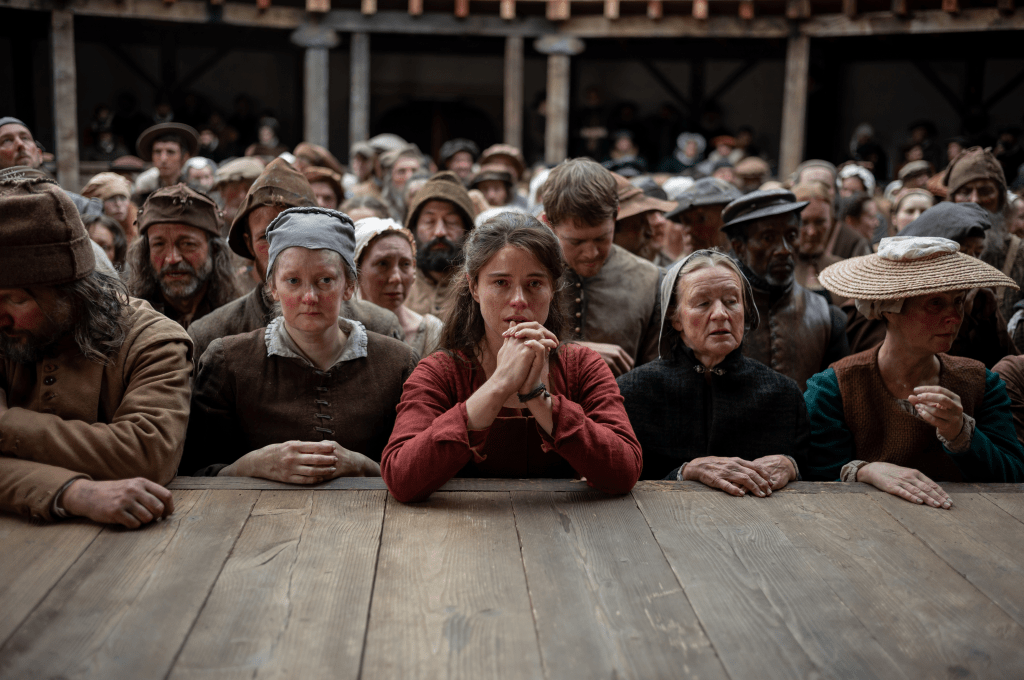
I didn’t expect the film to hit me as deeply as it did. As an adult, the closest I’ve come to parenthood is caring for my cats, so I assumed there might be an emotional distance between me and the story. I also avoid trailers these days so I can go into films with a sense of discovery, though I did see the trailer for this one before another movie and felt it revealed a bit too much. But as I watched Hamnet, I realized I didn’t need to be a parent to connect with it—and I was genuinely floored by how thoroughly it subverted my expectations. Even with all the glowing acclaim surrounding it, I kept my hopes neutral, only to find myself completely mesmerized.
From the moment the film opens, you can tell you’re about to witness something beautiful. Its simplicity, paired with stunning cinematography, creates an atmosphere that pulls you in immediately. The visuals anchor you in each location, while the sound design adds a layer of immersive realism that, for me, heightened the emotional impact. The production design shifts subtly but powerfully as the story progresses, and those changes land like a devastating blow after certain events unfold.

The performances in Hamnet are extraordinary. Paul Mescal delivers a genuinely heartbreaking turn, and Jacobi Jupe quietly steals the show—but it’s Jessie Buckley who gives one of the most astonishing performances I’ve ever seen from an actress. Watching her, I found myself thinking I might be witnessing one of the all-time great performances. The emotional depth she conveys—from the raw power of her screams to the tenderness in the way she looks at her children—is unreal. It’s the kind of work that makes her feel like a lock for Best Actress at the upcoming Oscars.
As I mentioned earlier, I personally enjoyed Zhao’s Eternals, even though it was divisive. When a filmmaker makes a film that polarizing, it can be incredibly difficult to bounce back, yet Hamnet feels like one of the most impressive comebacks I’ve seen from any director. Zhao seems to guide her cast not by dictating emotion but by creating a space where they can feel their way through the material. Her vision is precise, confident, and deeply humane. Films like this feel incredibly rare, and any awards recognition she receives will be fully deserved. One Battle After Another suddenly has some serious competition.

Going into this, I knew it would be an emotionally devastating film—but I didn’t expect it to bring me to tears as intensely as it did. The way the story subverts expectations makes its impact even more crushing, and I couldn’t help feeling that Zhao is channeling the collective grief and sudden losses the world experienced during the COVID-19 pandemic—the sheer unpredictability of it all. I was also deeply moved by the bravery of Jacobi Jupe’s character. For someone so young, his courage resonated with me and served as a reminder that bravery can emerge at any age.
What struck me most, though, was the film’s reflection on the importance of art and why we need it. In the final stretch, as audiences watch Hamlet, it’s Buckley’s Agnes who feels the most deeply connected, yet we also see how profoundly the performance reaches everyone in the room. It’s one of the film’s most beautiful moments—breathtaking in its emotional clarity. In the end, Hamnet shows how storytelling and entertainment can help us heal, make sense of our pain, and learn to move forward. Life can be unbearably difficult, but acts of courage—big or small—can echo through time and become stories the world carries for centuries.
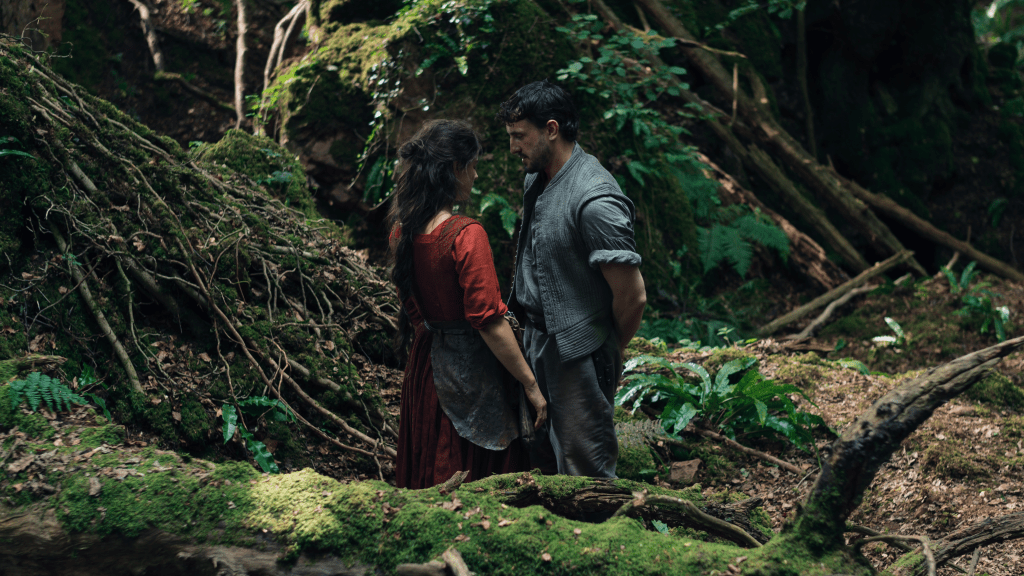
Overall, Hamnet is one of the best films of the year, anchored by one of the greatest performances I’ve ever seen from Jessie Buckley. The rest of the cast is exceptional as well, each contributing to the film’s emotional power. Chloé Zhao delivers one of the most impressive directorial comebacks in recent memory, crafting a work that feels both intimate and monumental. I sincerely hope this film is recognized across the board this awards season—it fully deserves every nomination it receives.
VERDICT: 5/5 – Perfect





 The Creative Cinematic Collection
You must be logged in to post a comment.