Frankenstein is the latest film now streaming on Netflix. Written and directed by Guillermo del Toro, it stars Oscar Isaac, Jacob Elordi, Mia Goth, Felix Kammerer, David Bradley, Lars Mikkelsen, Christian Convery, Charles Dance, and Christoph Waltz. The story follows Dr. Victor Frankenstein, a brilliant but egotistical scientist who brings a creature to life in a daring—and ultimately disastrous—experiment, setting in motion a chain of events that leads to the downfall of both creator and creation.
Frankenstein wasn’t as high on my list as it was for others. While I’ve always admired Guillermo del Toro’s work, I’ve never given any of his films a perfect score—until now. I missed the chance to see it in theaters, even though it was playing nearby, so I waited until I could watch it on the largest screen at home to approximate a theatrical experience. From the moment I finished the film, I knew it would be etched into my mind. The next morning, it was still impossible to shake. Frankenstein isn’t just one of the best films of the year—it’s one of the most inventive and daring movies in recent memory.
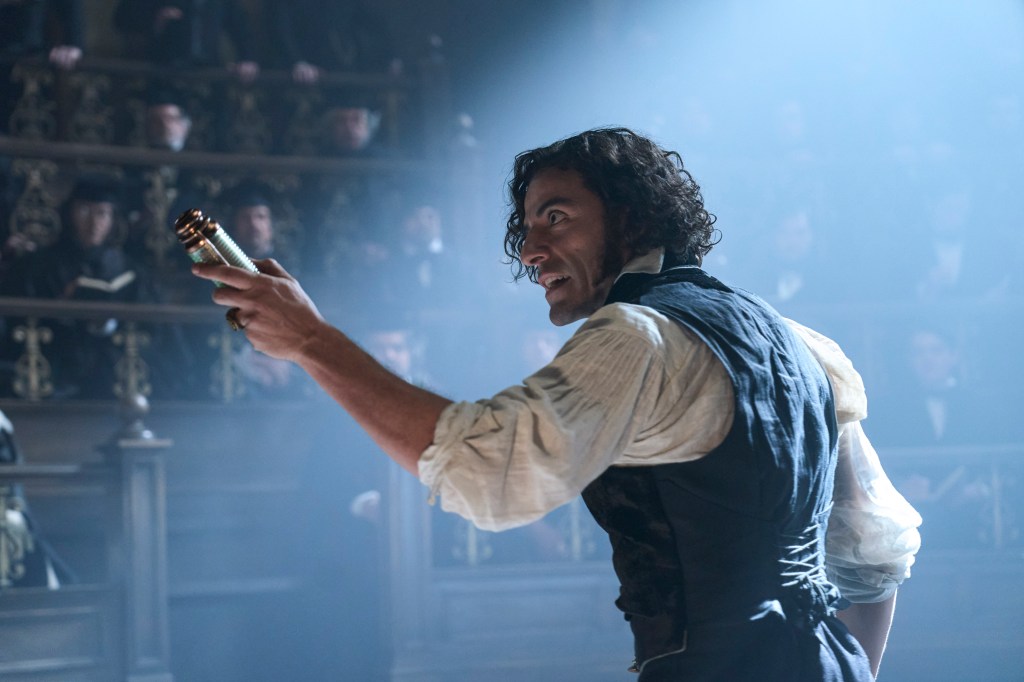
The film’s opening is unlike anything I’ve ever seen. I knew going in that it would show two perspectives—one from Frankenstein and one from the Creature—but I didn’t expect a prologue that could just as easily have served as the epilogue. Normally, I’m not a fan of stories that start at the end, as it can make the events leading up to it predictable. That wasn’t the case here. The introduction is utterly riveting, immediately establishing just how dark, complex, and violent the film is going to be. I can’t think of a better way to begin.
As the story shifts into Frankenstein’s perspective, I initially thought some flaws began to emerge. Like many viewers, I’m wary of voiceover narration, as it can detract from what’s unfolding on screen. But after reflecting on it, I grew to appreciate this choice—it mirrors who Frankenstein is and how he tells his story. He recounts events to someone who has just lost part of their crew, and at first, his detached, almost clinical tone felt jarring. In hindsight, it makes perfect sense: it underscores his selfishness, which becomes even clearer as the film progresses.

Oscar Isaac once again proves why he’s such a formidable talent, portraying a morally complex Frankenstein with depth and nuance. Mia Goth is perfectly cast, effortlessly conveying the right mix of emotion and intensity. But it’s Jacob Elordi who truly stands out—his transformative performance as the Creature is exceptional, easily ranking among the year’s best. It would be a shame if he didn’t at least earn a Best Supporting Actor nomination at the Oscars, as his performance embodies the film’s central themes. I honestly can’t imagine anyone else inhabiting the role as he does.
The film’s dual-perspective storytelling further elevates it. One might assume Frankenstein is the “good guy” and the Creature the “villain,” especially based on where the story begins—but the perspectives quickly challenge those expectations. Frankenstein’s viewpoint reveals his selfishness and the irreversible consequences of his actions, while the Creature’s perspective offers insight into his humility, pain, and justified frustration toward his maker. The story concludes on a thematic note that lingers long after the credits roll.

While the film makes use of a fair amount of CGI, it blends seamlessly with the practical effects, resulting in a visually stunning experience. As I’ve grown older and seen thousands of films, I’ve developed a strong preference for practical effects over CGI—and Guillermo del Toro ensures they are used throughout. The visual effects that are present integrate so smoothly with the practical work that not a single sequence ever breaks immersion, making the world of Frankenstein feel fully alive.
At two-and-a-half hours, some viewers might question the pacing, but I never once felt the runtime. Frankenstein’s perspective may occupy more of the screen time, yet the Creature remains integral, and the balance between the two perspectives is expertly maintained. The film covers an impressive amount of ground while never feeling overly long. It stands as one of the most meticulously crafted films of the year, and with its exceptional editing and design, it’s easy to see this film earning recognition in numerous technical award categories.

Overall, Frankenstein is a masterful film that continually subverts expectations. Only a filmmaker like Guillermo del Toro could create a work that so perfectly marries his distinct aesthetic with a compelling story and profound themes. The performances are consistently outstanding, with Jacob Elordi delivering what is easily a career-best turn. This is a film you simply cannot miss, and any recognition it receives is entirely deserved.
VERDICT: 5/5 – Perfect




 The Creative Cinematic Collection
You must be logged in to post a comment.