Anniversary is a new film set to hit theaters on October 29. Written by Lori Rosene-Gambino and directed by Jan Komasa, the film stars Diane Lane, Kyle Chandler, Madeline Brewer, Zoey Deutch, Phoebe Dynevor, Mckenna Grace, Daryl McCormack, and Dylan O’Brien. The story begins innocently enough: when Ellen and Paul’s son introduces his new girlfriend during their 25th wedding anniversary celebration, no one could imagine the chaos to come. The young woman, Liz, turns out to be Ellen’s former student—expelled years earlier for her radical views—and her reappearance marks the beginning of the family’s unraveling.
I was initially drawn to Anniversary purely because of its impressive cast. While I had a general sense of the plot, I managed to avoid all trailers and marketing—something I consider the ideal way to experience any film. Let me tell you: the official synopsis doesn’t come close to revealing the full scope or direction of this story.
With the review embargo lifting only a few days before release, I wouldn’t be surprised if Anniversary sparks a highly polarizing reaction from critics and audiences alike. Given Lionsgate’s recent streak of box-office disappointments, it’s clear the studio is hoping this one finds its footing. I can’t say for certain, but I have a strong feeling Monday’s mystery screening at AMC and Regal will turn out to be this film—and those early reactions might very well determine whether Anniversary becomes a sleeper success or another divisive misfire.
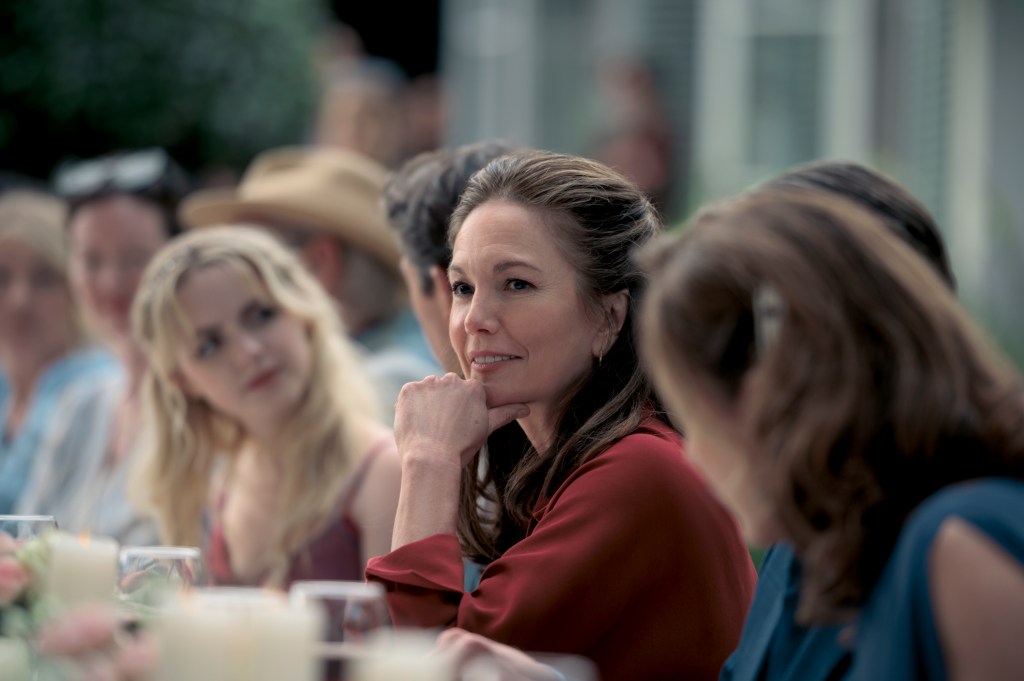
The film’s approach is epic in scale, broad in scope, and unafraid to take bold risks. It initially positions itself as a thriller, but as the story unfolds, it evolves into something entirely different. Anyone drawn in by the film’s suspenseful opening will find themselves captivated—at least at first. As the narrative deepens, viewers are likely to see parallels to real-world events, while others may interpret it as an exaggerated reflection of contemporary issues. Both perspectives are valid.
I admired the film’s willingness to take such audacious risks, especially in ways that resonate with current realities. However, I also found it difficult to fully suspend disbelief—some of the film’s developments feel too abrupt or implausible to occur so quickly. The message ultimately lands, but it demands a generous leap of faith from the audience.
With a predominantly American cast, it’s easy to see what drew everyone to the project. What intrigued me most, though, was that the film is directed by a Polish filmmaker. Viewing an American story through that lens adds an interesting layer of perspective, almost as if we’re seeing the country refracted through an outsider’s eye. It reminds me of how Darren Aronofsky approached Noah—a biblical story told from a non-religious standpoint. Just as Noah divided audiences, I wouldn’t be surprised if this film provokes a similarly polarizing response.

In many ways, we’re fortunate to see such an impressive ensemble assembled here. It’s a rarity these days to see Diane Lane take on a true leading role, and she proves to be the perfect anchor for this story—a woman desperately trying to protect her family from what’s coming. Kyle Chandler brings his trademark steadiness, gradually building toward an explosive finale. Dylan O’Brien impresses with a subtle transformation, convincingly depicting someone slowly consumed and manipulated by the chaos around him. Phoebe Dynevor, meanwhile, delivers one of the film’s standout performances, effortlessly drawing others—and the audience—into her character’s belief system.
That said, the ensemble occasionally feels larger than what the film can fully handle. I struggled to connect with Madeline Brewer’s character; while her arc lands on an emotional note, the path to get there feels overwrought. Zoey Deutch and Daryl McCormack are effective as a married couple, but their subplot ultimately feels extraneous—removing them wouldn’t significantly change the film. As for Mckenna Grace, she continues to prove herself as a talented young actress, but some of her character’s decisions strain credibility. Her performance is strong, yet the writing makes certain choices difficult to believe.

I have mixed feelings about the film’s conclusion. It’s clear the ending was never meant to be satisfying—the film’s purpose is to illustrate how a series of events can spiral toward a dire, inevitable outcome. You’re not supposed to leave the theater feeling happy, and that deliberate bleakness may turn some viewers off. While I understand and appreciate that intent, I still think it could have been handled with a bit more nuance. I particularly liked the way Phoebe Dynevor’s storyline was resolved; her arc feels complete and purposeful. However, the fates of the other characters come across as implausible and emotionally unfulfilling. Just a few additional minutes exploring what becomes of them could have made the ending far more resonant.
As the film transitions into its final act, I was especially struck by the shift in production design and cinematography. The visuals grow progressively bleaker and darker, mirroring the story’s descent into chaos. The film also makes several time jumps, and each one helps us better understand what has unfolded off-screen and how the world has changed during that time. While some of the exposition helps keep viewers oriented, it’s the visual storytelling that truly deepens the impact—showing us not just what has happened, but what could happen if this story ever reflected reality.

Overall, Anniversary is a film that will give audiences plenty to talk about—whether they end up liking it or not. About half of the ensemble delivers truly compelling performances, while the other half adds more weight than the film can fully carry. Even though the story occasionally feels exaggerated, particularly in how quickly events escalate, its underlying reflection of real-world tensions remains striking.
VERDICT: 3.5/5 – Pretty Good
 The Creative Cinematic Collection
You must be logged in to post a comment.