The Running Man hits theaters on November 14. Written by Michael Bacall and Edgar Wright, and directed by Wright, the film features an all-star cast including Glen Powell, William H. Macy, Lee Pace, Michael Cera, Emilia Jones, Daniel Ezra, Jayme Lawson, Sean Hayes, Colman Domingo, and John Brolin.
Desperate to save his ailing daughter, working-class Ben Richards agrees to compete in The Running Man—a brutal, high-stakes reality competition engineered by a charming yet ruthless producer. But Ben’s defiance, instincts, and determination make him an unexpected fan favorite—and a dangerous symbol of rebellion. As the ratings soar, so does the peril, and Ben must outsmart not only the elite Hunters but an entire nation obsessed with watching him fall.
I’ll admit, this film wasn’t high on my radar at first. Edgar Wright is always a dependable filmmaker, but the idea of a remake—especially of a film I hadn’t seen—didn’t immediately grab me. I decided to watch the original beforehand for context, and I’m glad I did. Compared to the original, this version is a massive improvement. On its own, it’s an entertaining and ambitious ride—flawed, but undeniably fun.

Given how busy he’s been lately, it’s remarkable how fully committed Glen Powell is here. Ever since his star-making turn in Top Gun: Maverick, he’s become one of Hollywood’s most sought-after talents—and this film proves exactly why. It’s hard to imagine anyone else in the role. Powell delivers both physically and emotionally, bringing depth and intensity to every moment. His performance not only drives the film but makes it effortless for the audience to connect with him throughout.
Alongside Powell, the film features a dynamic ensemble—some cast members steal the spotlight, while others feel more like glorified cameos. Michael Cera continues his strong year with a performance that breaks away from his usual typecasting, and Colman Domingo brings a confident, standout presence to the screen. On the other hand, I’m not quite sure what William H. Macy or Emilia Jones saw in their limited roles; removing them altogether might have made the film tighter and more focused.

The true standout of the film is its action—a spectacle from start to finish. While the energy feels slightly more restrained than in Wright’s past work, the sequences remain undeniably thrilling. The camera work almost becomes a character of its own, capturing the chaos and rhythm of each scene with unpredictable flair. There aren’t many extended one-take shots, but the ones we do get are long enough to draw you in completely. One sequence in particular—a shot from inside the trunk of a car—is something I’ve never seen before, and it’s the kind of bold, inventive touch only Edgar Wright could pull off.
While Wright excels in crafting exhilarating action, the film does lose momentum at times. It’s not necessarily a flaw, but the pace noticeably dips whenever the adrenaline subsides. The third act will likely be the most divisive element for audiences. I appreciated the film’s final shot—it lands perfectly—but the buildup leading there feels uneven and clunky. Much like Baby Driver, the finale doesn’t fully stick the landing. Wright’s attempt to subvert expectations is admirable, yet the tonal shift ends up feeling slightly disconnected from the rest of the film.
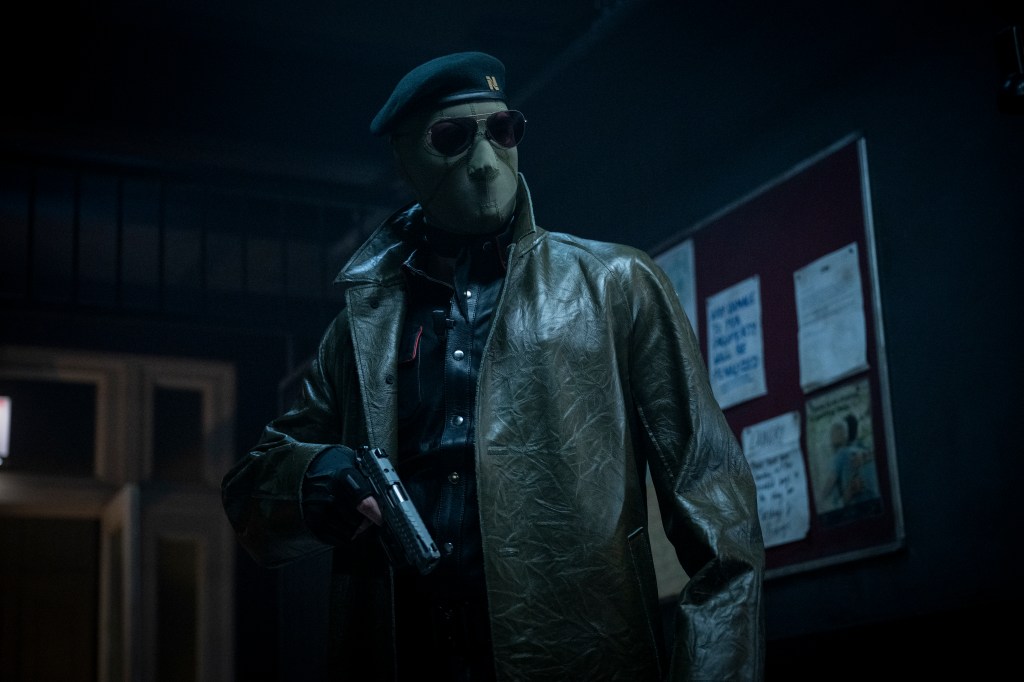
One reason the third act doesn’t quite land is the dialogue, which already felt uneven earlier in the film. At times, it seems intent on echoing lines from the original, which is understandable, but it breaks the immersion of what’s otherwise a more grounded, modern take. The result is dialogue that often feels unnatural—people simply don’t talk like this. There are moments where it even comes across as if the film is angling for quotable sound bites to use in marketing rather than letting the conversations flow organically.
Compared to the original, this version has much more to say thematically. While it doesn’t push its ideas as far as it could, the film still makes its message clear—about how society exploits people and how, inevitably, people push back against that treatment. From what I know of Stephen King’s source material, I’m actually glad this adaptation takes a different approach—one that feels more accessible and digestible for American audiences. In that sense, it reminds me a bit of last year’s American remake of Speak No Evil.

Overall, while The Running Man stumbles a bit in its writing and pacing, it more than makes up for it with spectacular action and standout performances. It’s an energetic, wildly entertaining ride that still carries Edgar Wright’s unmistakable style—even if it feels a bit more restrained than usual. I wouldn’t mind seeing another Powell–Wright collaboration in the near future.
VERDICT: 4/5 – Great




 The Creative Cinematic Collection
You must be logged in to post a comment.