Avatar: Fire and Ash is the third installment in the Avatar franchise, now playing in theaters. Written by James Cameron, Rick Jaffa, and Amanda Silver and directed by Cameron, the film stars Sam Worthington, Zoe Saldaña, Sigourney Weaver, Stephen Lang, and Kate Winslet. In the aftermath of the devastating war against the RDA—and the loss of their eldest son—Jake Sully and Neytiri face a new threat on Pandora: the Ash People, a violent and power-hungry Na’vi tribe led by the ruthless Varang. As the conflict escalates, Jake and his family must fight for their survival and the future of Pandora, pushing them to their emotional and physical limits.
I still remember exactly where I was in life when I first saw Avatar. I even recall hearing a woman afterward say that it was going to change movies forever—and she was certainly right. While I really enjoyed the film on my first viewing, revisiting it later proved difficult; it became clear that much of its appeal was tied to the theatrical experience rather than the film itself.
Then came the sequel, which significantly improved upon the original’s flaws and worked as a genuinely good movie both in and out of the theater. I enjoyed it far more, and it made me think the franchise was finally on the right track. I even recently picked up the video game on PS5.
Needless to say, I was left deeply disappointed by the latest entry.

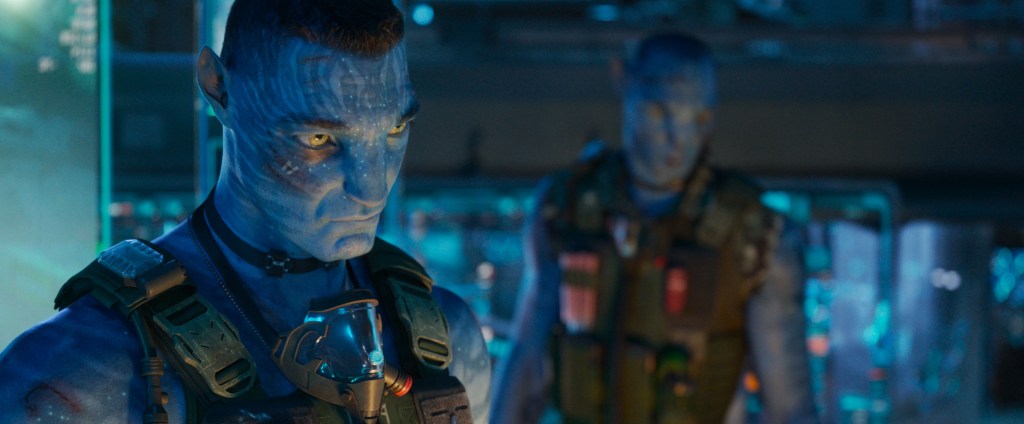
Despite the mixed reception the film was receiving from critics, I went in with an open mind—and genuine excitement. From the opening moments, it’s immediately clear just how far 3D technology has come since the first Avatar. One of my main criticisms of the original was how starkly the visual effects contrasted with the human characters. That issue is largely absent here; in fact, the integration feels close to perfected. It’s easy to understand why these films take so long to complete, and viewers looking to be awed by sheer visual spectacle will not be disappointed.
However, something felt off-putting from the very first shot. The film opens with a familiar image from the original, which in itself is fine—but what followed quickly pulled me out of the experience. I immediately noticed the high frame rate, something I have never been able to appreciate. I’ve never understood the appeal of higher frame rates, dating back to the boom of LED and LCD televisions that aggressively pushed them. It’s a stylistic choice I also disliked in Michael Mann’s later films. I may be misremembering, but I don’t recall the earlier Avatar entries using such a pronounced high frame rate. Here, it makes action sequences feel unnaturally sped up, as if the movie were being played at 1.5x speed on Netflix.
Before seeing the latest sequel, I told a friend that the Avatar films tend to work best when appreciated primarily for their visuals, as the writing has never been their strong suit. The first film’s ideas, while emotionally resonant, were ultimately familiar and derivative. The second entry did manage to subvert expectations in places, but it was still weighed down by plot holes that were difficult to overlook. This latest installment lands somewhere in between. Rather than offering something new the way the sequel did, it feels more like a rehash of that film. This time, James Cameron seems intent on refining elements that didn’t need refinement, a choice that only results in a more convoluted narrative and greater inconsistencies than before. On top of that, the dialogue is often painful to sit through, and this installment relies on it far more heavily than the previous entries.
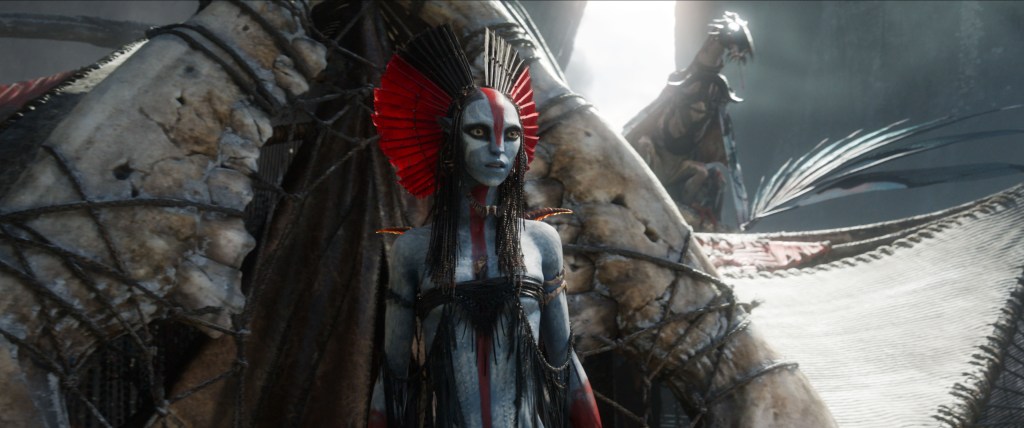
That said, the film does take a few creative swings that actually land. I appreciated the direction taken with Jack Champion’s character, even if his performance didn’t fully rise to the material. The standout element, however, is the new villain Varang, played by Oona Chaplin. While she was largely unfamiliar to me going in, her performance here is so commanding that I’ll be seeking out anything she appears in next.
My biggest issue with the film is its runtime. At three hours and fifteen minutes, it has no justification for being as long as it is. It feels as though Cameron is deliberately stretching the story of the second entry when it never needed to be expanded. Instead of breaking new ground, the film repeatedly treads familiar territory. Rather than leaning into the already established human antagonists, it squanders large stretches of time on derivative dialogue and emotionally manipulative scenes that ultimately left me unmoved. The film seems intent on raising the stakes by amplifying spectacle and star power, when these movies are at their best exploring the world itself and giving depth to its characters. There’s even a surprising return of one familiar character that, by the end, feels entirely pointless.
Despite my frustrations—and even with the high frame rate—I still found the action enjoyable on its own terms. Ironically, it never feels as plentiful as it should, which is disappointing given this is the longest installment yet. Visually, however, the film remains stunning, with 3D that enhances immersion rather than distracting from it. The score also does a lot of heavy lifting, effectively heightening the emotion during major set pieces and lending impact to moments that might otherwise fall flat—especially when the film sidelines established characters in favor of less compelling detours.

Overall, Avatar: Fire and Ash is a disappointing misfire. Do I see it earning a Best Picture nomination at the upcoming Oscars? No. A Best Visual Effects nomination, however, feels all but inevitable. Even with the questionable use of a high frame rate, the film represents a near-perfect achievement in visual effects.
Setting the atrocious writing aside, Cameron once again proves his unwavering commitment to the theatrical experience—this is simply not a film that would work as a straight-to-streaming release. It will be interesting to see how it ultimately performs at the box office, though more entries in the franchise seem inevitable. The lingering question is whether future installments will finally improve on the writing. As it stands, the series is one for three, but it remains undeniably impressive in its ability to inspire visual awe.
VERDICT: 2.5/5 – Okay
 The Creative Cinematic Collection
You must be logged in to post a comment.