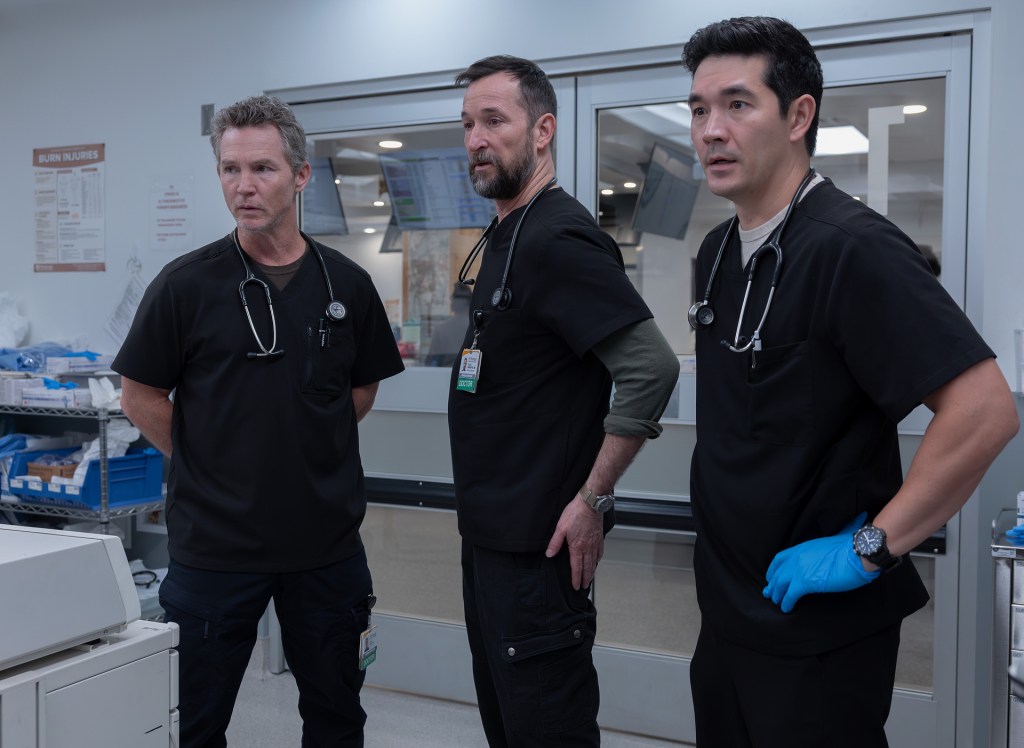
We’ve finally made it. Fifteen episodes—and fifteen hours in the show’s timeline—later, we’ve reached the conclusion. With a 49-minute runtime, I was genuinely nervous the finale wouldn’t have enough space to answer everything it needed to. The preview even hinted that some threads might remain unresolved, especially with a major new case arriving at the hospital.
As popular as the series has become, it’s also one that’s best experienced without clinging to personal theories. I shared a few of my own on Instagram, but more for fun than with any expectation of being right. Ultimately, if you let go of those expectations and fully lean into what the writers are aiming for, the season lands on a powerful high—one that lingers long after the credits roll and makes the wait for season three all the more exciting.
One of the things I most appreciate about The Pitt is how it handles cliffhangers. Nearly every episode ends on one, but instead of feeling manipulative, they’re quickly and thoughtfully resolved in the following installment. They function less as cheap suspense and more as effective setup. Even though this episode ends on a cliffhanger of its own, it still provides enough substance to address several lingering questions.
The writing consistently trusts its audience, allowing us to piece things together without over-explaining. That approach really pays off in the finale, which wastes no time diving into the truth behind Dr. Al-Hashimi. The reveal not only clarifies her situation but deepens our empathy for her in a meaningful way. With Supriya Ganesh already departing, it seems likely we haven’t seen the last of Sepideh Moafi’s Dr. Baran Al-Hashimi, and that she’ll return in season three.
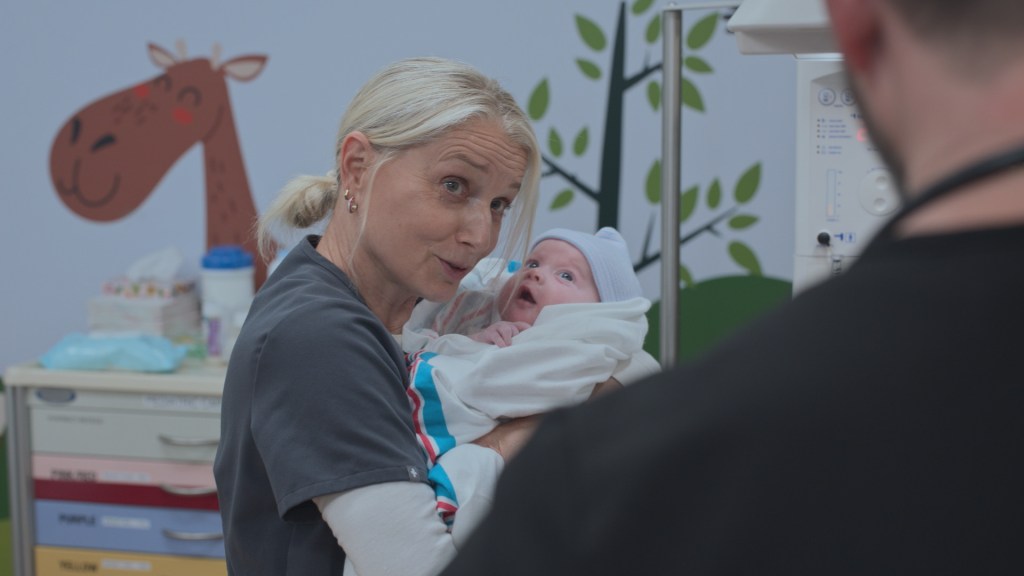
Based on the way Dr. Robby tries to tie up loose ends throughout the episode, his intentions for after the shift become pretty clear. But tracking everyone down proves difficult, and he ends up getting pulled into an emergency C-section with Dr. Abbot. From the previews, I was worried this storyline would dominate the episode and take time away from resolving key questions. Instead, it’s handled efficiently—taking up roughly ten minutes—and ultimately serves as a turning point that pushes Robby toward a moment of realization.
That situation leads to a crucial conversation between Abbot and Robby about what he’s going through. Given that Abbot went through something similar last season, it makes perfect sense that he’s the one who can reach him again. Shawn Hatosy’s performance this season feels like another Emmy-worthy turn; he brings such grounded emotion to the role. The exchange between him and Robby is especially powerful—it genuinely brought me to tears because of how authentic it feels. Noah Wyle is equally outstanding here, delivering what might be his best work since episode 13 of season one. You can see Robby struggling to keep himself together, holding everything in without completely breaking—and that restraint makes it all the more impactful.
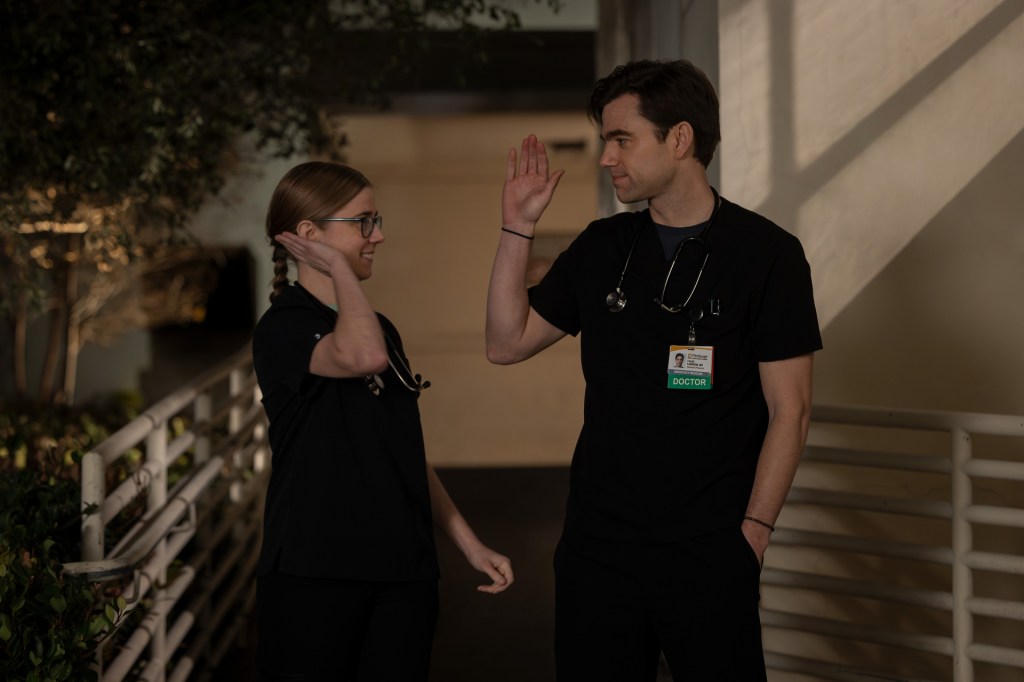
There were two moments that brought me to tears: the scene I just mentioned, and the final moments of the episode. We never needed to know who dropped off Baby Jane Doe—that was never the point. Her presence serves as a symbol of hope for these characters. I had a feeling the story might head in that direction, but it’s handled with a level of thoughtfulness that makes it even more effective.
What I didn’t expect was just how significant the baby would become for Robby. In his final scene, he opens up in a way that completely reframes how we see him. It adds a new layer to his character that lingers long after the episode ends. While it’s clear Noah Wyle isn’t going anywhere—so I don’t expect anything dire to happen to Robby—his conversations with Abbot and Langdon will undoubtedly reshape our understanding of him heading into season three.
Framing the entire season around Independence Day ultimately pays off in the closing moments, as the staff gathers on the rooftop to watch the fireworks. At first glance, it seems like a simple image of awe, but there’s something more layered beneath their expressions. You can feel both their pride and their exhaustion—an unspoken tension between loving the country they serve and grappling with a system that often works against them.
It becomes a quietly powerful moment of unity. After everything they’ve endured, they’re able to stand together, take it in, and recognize that, despite it all, they’ve made it through—and can continue to do so as a team.
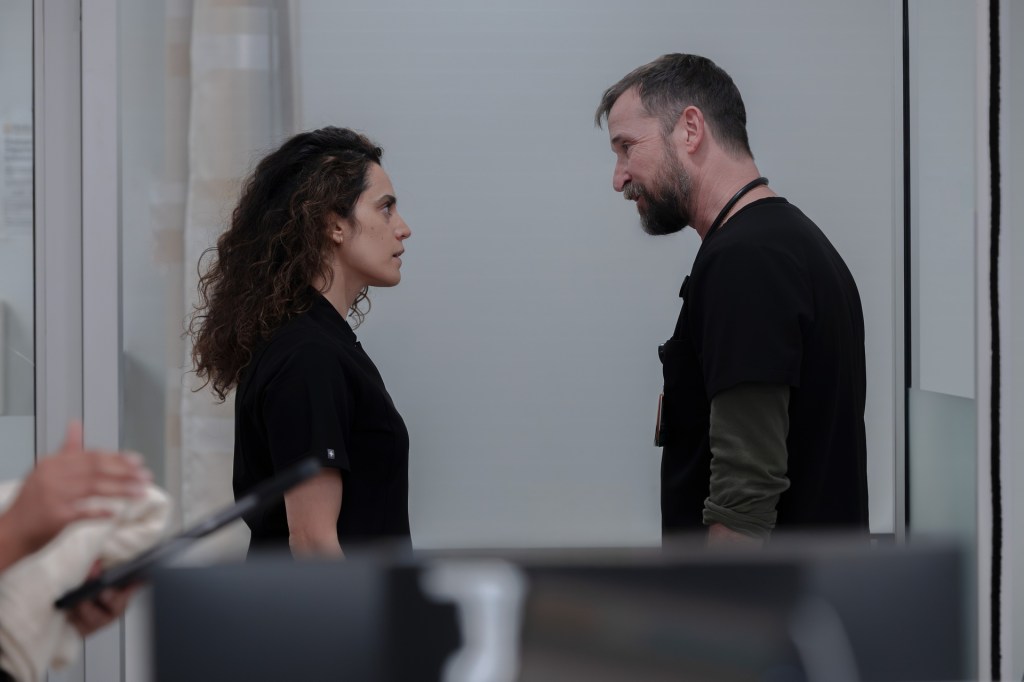
Beyond the heavier drama and thematic weight of the episode, there’s also a surprising amount of warmth to hold onto. Watching Dr. Robby interact with his staff before they head out is bittersweet—there’s a clear sense of sadness, but also genuine affection in those moments. Even when Dr. Whitaker gets picked up by the widow, Robby’s reaction isn’t of concern—it’s quiet happiness that Whitaker has someone in his corner.
Robby’s interaction with Mohan feels especially important, serving as a necessary emotional beat that brings added closure. Knowing about Ganesh’s departure ahead of time only makes that final scene land harder, giving it a sense of significance that might’ve otherwise been missed. It was also nice to see Robby & Dana being peaceful with each other. And on a lighter note, the reveal of who took Dr. Whitaker’s badge is perfectly timed—it adds a much-needed bit of humor that rounds out the episode nicely.
I was genuinely surprised by how much this episode expands the scope of the hospital, particularly through Langdon’s storyline. Up until now, the season has remained largely confined to the main ER, so following him into new areas we haven’t seen before adds a refreshing sense of scale. It also feels purposeful—I don’t think Langdon is necessarily moving on from his current position, but rather that the show is using this shift to highlight how much he’s changed.
By stepping outside the ER with him, we get a clearer sense of what he has to do to prove he’s drug-free, while also reinforcing just how essential he’s been to the department all along. It’s a smart way of deepening both the world of the hospital and Langdon’s character at the same time.
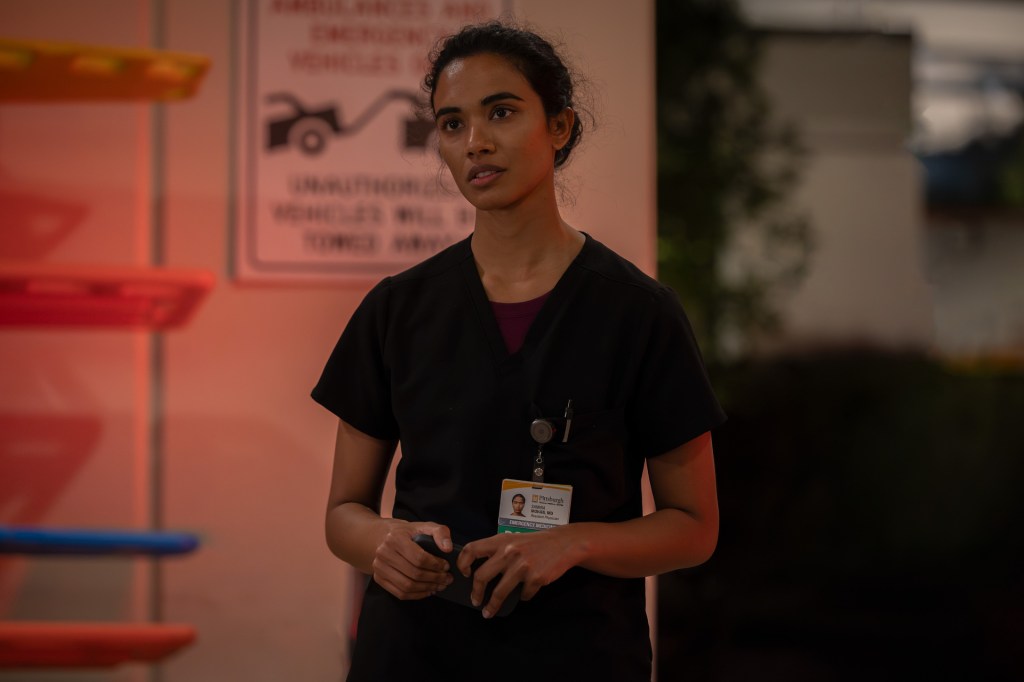
Overall, it’s a phenomenal finale—one that perfectly captures the spirit of the entire season while still leaving certain elements open to interpretation heading into what’s next. It feels complete in all the ways that matter, but that sense of openness invites continued conversation and reflection while we wait for the new season.
Noah Wyle and Shawn Hatosy deliver some of their strongest work here, elevating an episode that’s already packed with emotional and thematic weight. The dialogue, in particular, feels strikingly real and purposeful—there’s a good chance it’ll hit close to home and linger with you after it’s over.
I’m incredibly grateful to have covered this show over the past 15 weeks. If you’ve been following along, thank you—it truly means a lot and allows me to keep doing what I love. I’m excited to continue sharing that passion, so stay tuned for more coverage as we look ahead to what’s next.
 The Creative Cinematic Collection
You must be logged in to post a comment.