Review by Chadd Clubine
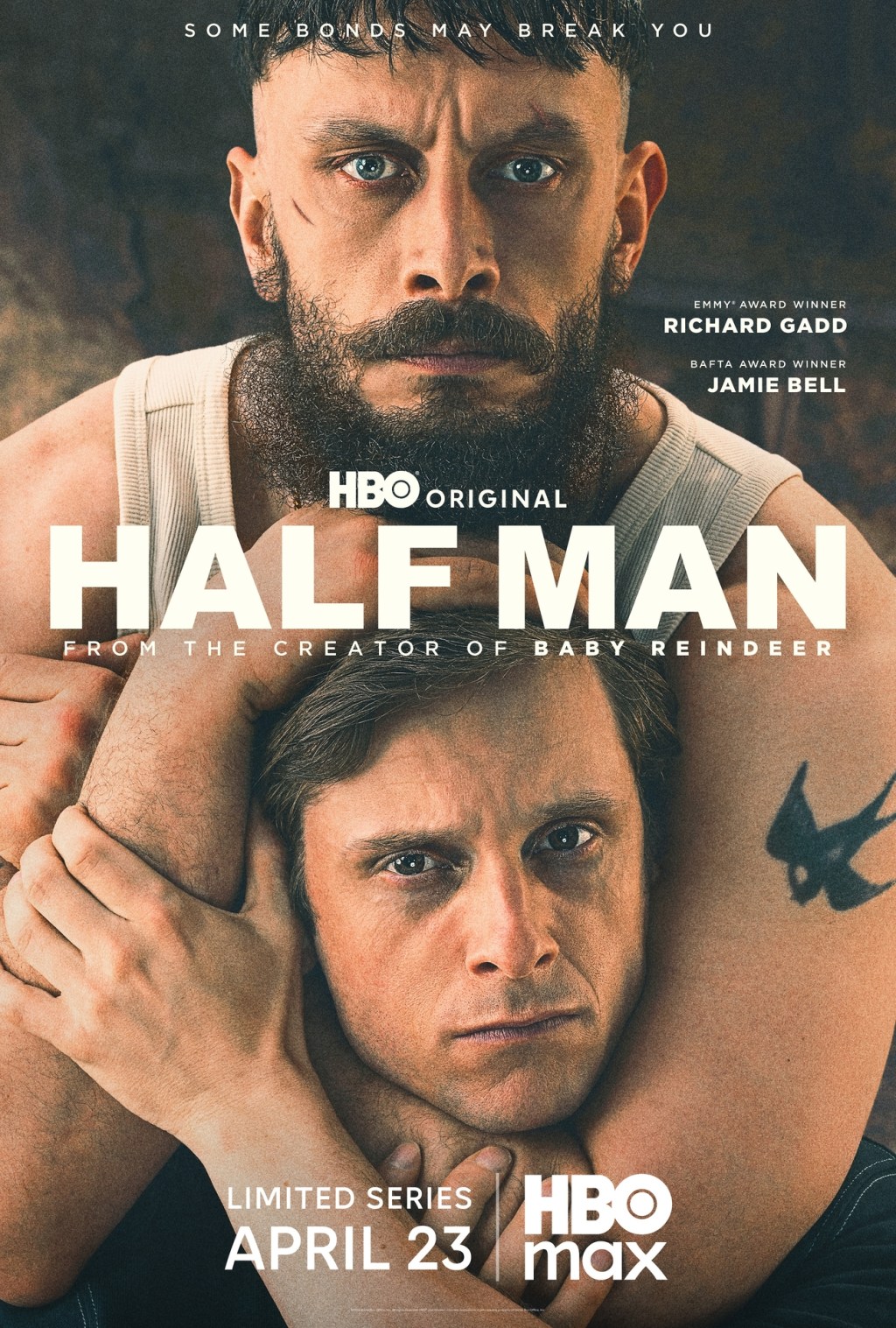
Half Man is a new miniseries created by Richard Gadd, who also stars alongside Jamie Bell, Stuart Campbell, and Mitchell Robertson. The first episode is now streaming on HBO Max, with new episodes airing weekly on HBO every Thursday for the next five weeks, leading up to the season finale.
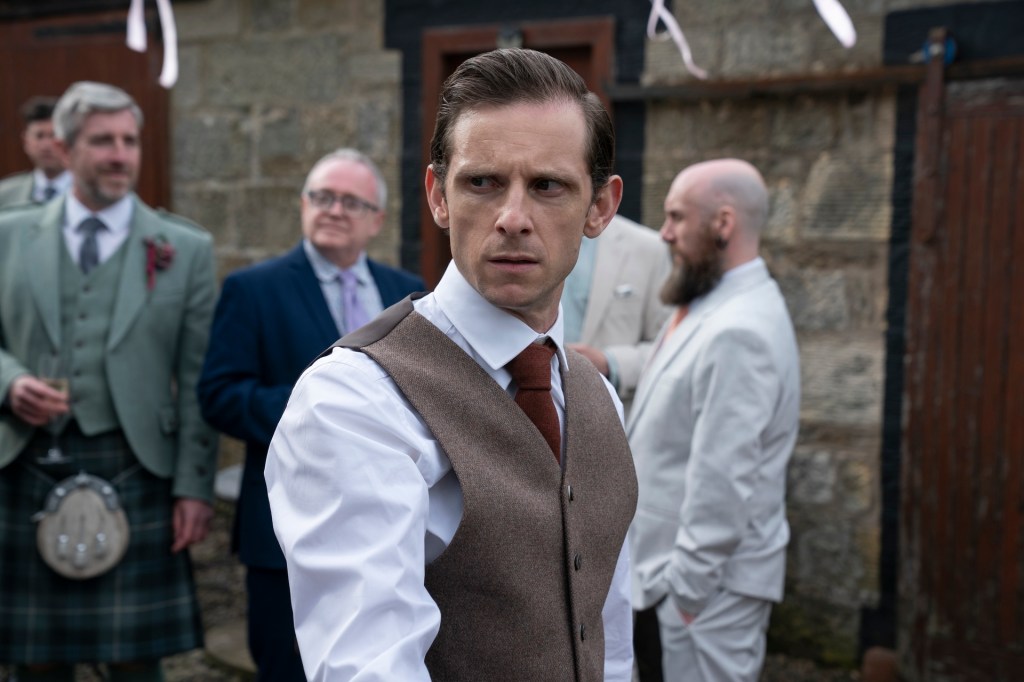
When Niall’s estranged ‘brother’ Ruben shows up at his wedding, it leads to an explosion of violence that catapults us back through their lives.
In many ways, Half Man feels like a companion piece to Gadd’s prior show, Baby Reindeer, particularly in its continued exploration of toxic masculinity. It’s clear from the writing and performances that Richard Gadd is working in a space he understands deeply—one that could potentially define a generation of television storytelling.
Baby Reindeer became a cultural phenomenon in part due to its all-at-once release, which fueled immediate, widespread discussion. By contrast, Half Man adopts a weekly release structure across six episodes. With that shift in rollout, it remains to be seen whether the series will achieve the same level of impact or conversation. If it does, it will be interesting to see whether it generates the same kind of cultural talking points that Baby Reindeer sparked.

Compared to Baby Reindeer, Richard Gadd reveals a strikingly different side of his range. In many ways, his character feels like an inversion of what he portrayed previously—terrifying, controlled, and deeply intimidating in what may be one of the standout performances of the year. Opposite him, Jamie Bell delivers one of his most vulnerable performances to date.
Together, these two characters—shaped by vastly different backgrounds and upbringings—are forced into a fraught, uneasy brotherhood. As the narrative gradually peels back new layers of information, their complexity becomes clearer, offering a broader and more unsettling picture of how toxic masculinity can manifest across very different types of men.
Richard Gadd seems to have a deep well of stories rooted in themes of toxic masculinity—material that feels both urgent and timely. The series suggests a strong awareness of how male behaviour can shape and damage relationships, while also tracing how those patterns begin and, in some cases, might be confronted or interrupted.
Crucially, the show never frames toxic masculinity as anything other than harmful. It isn’t interested in excusing it, but in examining its origins and ripple effects with clarity and control. From the moment its premise is established, it becomes difficult not to remain locked into how the story will ultimately resolve, and what it has to say along the way.
Half Man falls just short of feeling like a masterpiece. It’s still compelling and, at times, exceptional, but Richard Gadd’s writing occasionally feels like it needs a little more refinement to fully realize its realism and thematic depth. There are moments where the viewer is asked to accept a degree of implausibility in order to keep pace with the narrative. This is most noticeable in the younger timelines of the brothers, where events sometimes unfold in plain sight without the level of attention or consequence they might realistically attract. Rather than being fully interrogated, these gaps are often smoothed over in service of maintaining momentum, which can slightly weaken the show’s sense of grounded realism.
The structure of the story ultimately serves the way the series concludes, but it also contributes to an ending that feels somewhat abrupt and doesn’t fully bring its themes together in a unified way. Rather than closing on a clear, thematically resonant image of what has unfolded, it instead ends with a sudden cut to black that lingers in its ambiguity. In that sense, there’s a chance it could still achieve the kind of sustained discussion that Baby Reindeer generated once all six episodes are available and the full picture can be taken in at once.

Aside from a few minor issues, this really feels like something only Richard Gadd could have created. Giving Jamie Bell the lead allows Gadd to step back slightly and shape the series more from behind the scenes, ensuring it aligns with the quality and vision he’s aiming for. That balance also gives the first half of the story room to breathe as it explores the characters’ younger selves in more depth. The casting across timelines is particularly striking—the resemblance and continuity between the younger and older performances feels almost uncanny, which strengthens the show’s sense of cohesion. Positioning Gadd in a less central on-screen role also enhances his character’s presence; he becomes more controlled, more distant, and consequently far more intimidating, to the point where the viewer instinctively feels uneasy whenever he’s on screen.
It’s difficult to go into too much detail without venturing into spoilers, especially with only the first episode currently widely available. What’s already clear, though, is how layered and intricate the story becomes as it unfolds, and I suspect viewers will appreciate that complexity once the full series is out. Just when you think you’ve got a handle on where things are heading, the show introduces another shift that reframes everything again. The decision to move between past and present is particularly effective, keeping the narrative dynamic while constantly prompting the audience to reassess what they think they know.

Overall, Half Man is another strong outing from creator Richard Gadd. Gadd delivers an intensely intimidating performance that stands out as one of the year’s most memorable, while Jamie Bell takes on something entirely new and finds a compelling rhythm within it. Just when you think you have the story figured out, it continues to shift and reframe itself, never allowing certainty to fully settle in. While the conclusion may feel abrupt on first viewing, it also adds a layer of ambiguity that enhances its rewatch value. It’s a confident, unsettling piece of television, and it leaves real anticipation for what Gadd chooses to explore next.
VERDICT: 4/5 – Great
 The Creative Cinematic Collection
You must be logged in to post a comment.